

Is the Holocaust Is Still Worth Remembering?
Asking the Real Theological Question of the Holocaust

![[HERO] "Adam, Where Are You?": Why the Holocaust Still Asks a Theological Question | Dr. Marcus Peter](https://substackcdn.com/image/fetch/$s_!Wkal!,f_auto,q_auto:good,fl_progressive:steep/https%3A%2F%2Fsubstack-post-media.s3.amazonaws.com%2Fpublic%2Fimages%2F7bd0a3b3-e648-4677-a8bd-296e588d3b31_1536x1024.webp "[HERO] \"Adam, Where Are You?\": Why the Holocaust Still Asks a Theological Question | Dr. Marcus Peter")
The recent and profound encounter between the leadership of Yad Vashem and the Successor of Saint Peter serves as a haunting echo of a question that first resonated through the primordial gardens of our origin. When the Divine Voice called out to the first man with the inquiry of “Ayekah,” or “Where are you?”, the Creator sought a confession of moral location rather than a physical coordinate in the landscape. This same interrogation persists across the decades, piercing through the fog of history to challenge our modern complacency regarding the darkest chapters of the twentieth century. To contemplate the Holocaust as a Christian is to realize that this event remains a permanent theological crisis that demands our total attention and a renewed commitment to the preservation of human dignity. We reside in a cultural milieu where the memory of the Shoah is being systematically diluted, yet the duty to remember serves as a fundamental pillar of our collective moral survival.

In our contemporary landscape, we witness a terrifying resurgence of antisemitism that functions as a “lingua franca” for the fringes of our political and social discourse. This ancient and irrational hatred has become a unifying language for ideologies that otherwise exist in states of perpetual conflict with one another. We see radical secularists on the left joining hands with distorted ethno-nationalists on the right, finding a bizarre and demonic common ground in their shared disdain for the Jewish people. This alliance of extremes reveals that antisemitism is a spiritual pathology that seeks to strike at the very root of the Judeo-Christian tradition. Because the Jewish people remain the original witnesses to the Revelation of the One True God, they represent a permanent provocation to any system that seeks to enthrone human power as the ultimate authority. By attacking the foundation of our shared spiritual lineage, these movements reveal their shared desire to dismantle the moral architecture that has protected Western civilization for millennia.
The theological significance of this hatred extends far beyond simple racial prejudice, because it represents a rejection of the Logos that governs the universe. When we allow the dehumanization of our elder brothers in the faith to go unchallenged, we are essentially consenting to the erasure of the Imago Dei within ourselves. Every act of antisemitic rhetoric serves as a direct assault on the concept of Natural Law, which posits that every human being possesses an inherent and unalienable worth granted by the Creator. Our modern society often suffers from a profound identity crisis, as we struggle to define the boundaries of human rights without reference to a higher moral order. By looking back at the systematic industrialization of death during the Holocaust, we see the logical conclusion of a world that attempts to function without the objective constraints of divine law.

We must recognize that the preservation of Holocaust memory is an act of justice rather than a mere academic exercise in historical preservation. This memory constitutes a moral debt that we owe to those who were silenced by a regime that worshipped at the altar of blood and soil. For the Catholic, this debt is especially acute, as we understand that our salvation history is inextricably linked to the covenant established with the house of Israel. To be a follower of Christ is to acknowledge that our faith is grafted onto the olive tree of Israel, and therefore, any threat to the Jewish people is a threat to the integrity of our own spiritual home. You can explore more about our shared responsibility and the roots of our mission at https://www.marcusbpeter.com/about.
The question “Adam, where are you?” remains unanswered by a world that chooses to ignore the warning signs of rising tribalism and ideological fervor. We frequently find ourselves trapped in a “truth machine” of our own making, where digital echoes amplify our worst impulses while muffling the screams of history. Our current era of information overflow often lacks the wisdom required to discern the patterns of the past, leading us toward a dangerous state of historical amnesia. Instead of learning from the failures of the previous century, many today prefer the comfort of simplistic narratives that cast the “other” as the source of all societal ills. This failure of the imagination is precisely what allowed the machinery of the Shoah to begin its slow and steady operation in the minds of ordinary people.
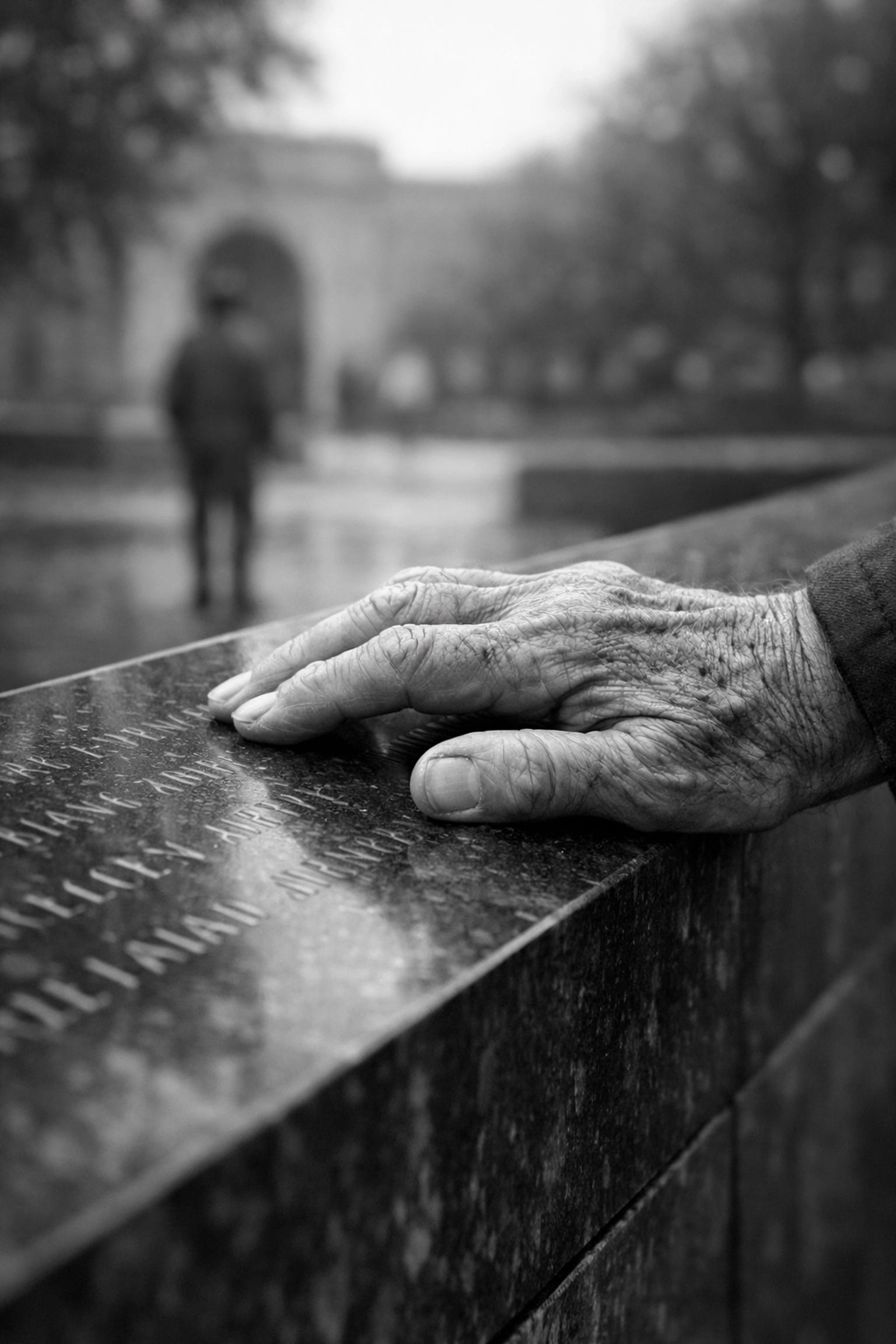
If we desire to prevent the return of such darkness, we must anchor our culture in the bedrock of reality rather than the shifting sands of political expediency. As I have often noted, reality bats last, and the reality of human dignity is something that no government can legitimately vote away. The Church must lead the way in this effort, serving as a bulwark against the rising tides of irrationality and hate. We are called to be a transformative presence in a world that has forgotten how to recognize the face of God in the face of the stranger. This requires a bold evangelization of the culture that uses both the light of Scripture and the clarity of Natural Law to defend the vulnerable.
The struggle against antisemitism is fundamentally a struggle for the soul of humanity, because it forces us to choose between a world governed by power or a world governed by love. When extremists use the Jewish people as a scapegoat for their grievances, they are attempting to outsource their own moral failures onto a group that has historically borne the weight of human sin. As Christians, we must stand in the gap and refuse to allow this “lingua franca” of hate to find a home in our communities or our hearts. We must remember that Jesus is the only answer to our global crises of identity and purpose, and His life was one lived in total solidarity with the marginalized and the persecuted.

Furthermore, the protection of human dignity in the present requires an honest assessment of how we treat the memory of the past. The meeting at the Vatican highlights the necessity of religious and secular leaders working in tandem to ensure that the cry of “Never Again” remains a living reality rather than a hollow slogan. We see a world that is increasingly fragmented, yet the memory of the Holocaust provides a rare point of moral consensus that we must guard with jealous intensity. This guardship involves educating the next generation about the specific theological and philosophical errors that led to the death camps. We must teach them that the path to genocide begins with the subtle erosion of the truth and the quiet acceptance of small injustices.

In this era of unprecedented technological change, we are often tempted to believe that we have progressed beyond the primitive hatreds of our ancestors. Yet, the persistent stain of antisemitism proves that our technological advancement has far outpaced our moral development. We have created a world where information travels at the speed of light, yet we still find ourselves using that speed to spread the same lies that poisoned the minds of Europe a century ago. This reality necessitates a return to a “scandal of sanity” where we refuse to participate in the madness of the crowd. You can find further reflections on maintaining moral clarity in a confused world at https://www.marcusbpeter.com/p/the-scandal-of-sanity.
Ultimately, the question “Adam, where are you?” invites us to step out from behind the trees of our own excuses and face the light of divine accountability. It asks us if we have the courage to stand with the oppressed when it is no longer fashionable or convenient to do so. It asks us if we truly believe that every person is a bearer of the divine spark, or if we merely use that language when it suits our political goals. The Holocaust serves as a permanent mirror for the human race, showing us both the depths of our depravity and the height of the sacrifice required to overcome it. By honoring the memory of those who were lost, we reaffirm our own commitment to a future where the dignity of the human person remains the supreme principle of our common life. Let us resolve to be the ones who answer the Divine Inquiry with a firm and unwavering presence, standing as witnesses to the Truth in an age that desperately needs it. I invite you to explore the full archive of reflections on faith and culture at https://www.marcusbpeter.com/archive as we continue this mission together.
Tribalism and ideological fervor are traits of Zionist Jews, are they not?