
The Golden Dome’s Identity Crisis
Why ‘Catholic’ Must Mean Something Again

![[HERO] The Golden Dome's Identity Crisis: Why 'Catholic' Must Mean Something Again | Dr. Marcus Peter](https://substackcdn.com/image/fetch/$s_!8LeW!,f_auto,q_auto:good,fl_progressive:steep/https%3A%2F%2Fsubstack-post-media.s3.amazonaws.com%2Fpublic%2Fimages%2F57dc2599-8f1f-4ff8-a7c0-0455f791209c_1536x1024.webp "[HERO] The Golden Dome's Identity Crisis: Why 'Catholic' Must Mean Something Again | Dr. Marcus Peter")
The shimmering Golden Dome of the University of Notre Dame is as an iconic landmark of American Catholicism, representing a history of faith, grit, and intellectual excellence that has inspired generations of the faithful. Or at least, it is supposed to be. This physical brilliance often masks a troubling internal reality where the institution appears increasingly embarrassed by the very theological foundations that allowed it to rise to prominence in the first place. We are currently witnessing a long and agonizing slide where once-great universities trade their theological souls for the hollow approval of secular academic prestige, acting as though the truths of the faith are obstacles to be managed rather than the light that should guide every inquiry. The recent public discourse surrounding leadership appointments at such institutions highlights a critical breaking point for many Catholics who are tired of seeing their heritage watered down to satisfy the demands of a culture that remains hostile to the Gospel.
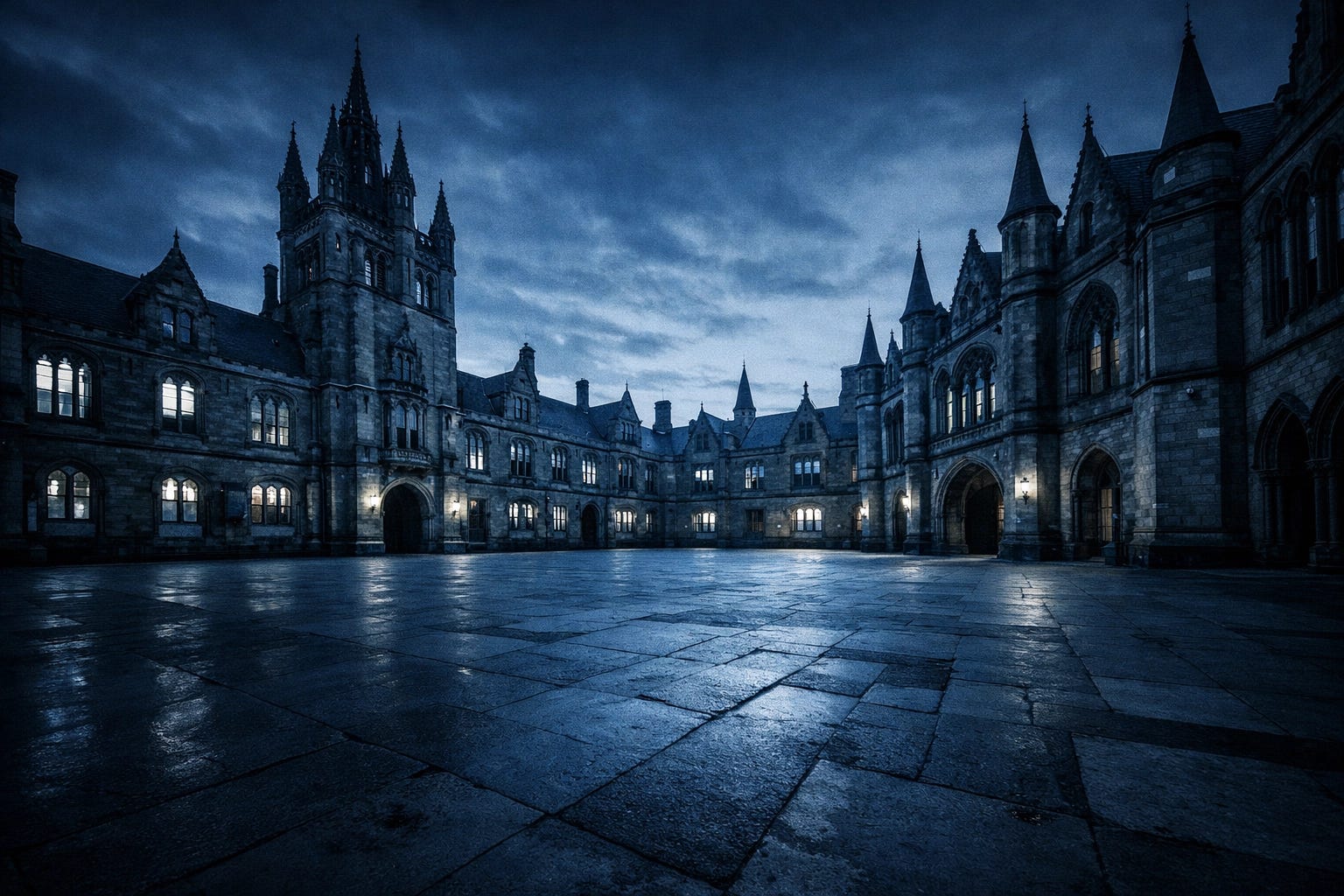
When a Catholic university begins to prioritize its ranking in secular journals over its fidelity to the Magisterium, it inevitably enters a cycle of identity dilution that eventually leaves the institution recognizable only by its architecture. The statistics regarding faculty composition tell a sobering story, as recent research indicates that the proportion of Catholic faculty has declined to a level where the unique religious mission of the school remains a secondary concern for many within the administration. It is a profound irony that a school dedicated to Our Lady would consider placing individuals in positions of significant influence who hold public views that directly contradict the sanctity of human life and the dignity of the person. These compromises are often framed as efforts toward inclusion or academic freedom, yet they frequently result in the exclusion of the very Catholic voice that the university was founded to amplify.
The recent victory of common sense and clerical courage, where a controversial leadership appointment was finally abandoned after significant pressure from the faithful and several high-ranking bishops, offers a glimmer of hope in an otherwise dark landscape. This event demonstrates that the people of God are weary of the constant equivocation and the “cautious arm’s length” approach that administrators take toward the teachings of the Church. It remains a travesty that someone with stalwart and public positions against the protection of the unborn would ever be considered for a leadership role in a Catholic institution, especially one that claims to be a leader in global affairs and ethics. True accompaniment and dialogue require a firm foundation in the truth, and reality bats last when we try to build a community on the shifting sands of modern ideology rather than the rock of Christ.
We must ask ourselves what a Catholic university actually owes to the Church and to the parents who sacrifice immensely to send their children to these hallowed halls. If the education provided is indistinguishable from that of a secular state school, except for the presence of a crucifix on the wall, then the institution has failed in its primary mission of formation. The decline of Catholic identity often begins with small concessions that seem harmless at the time, such as removing the explicit mention of the Catholic mission from staff values frameworks or hiring faculty who view the faith as a quaint relic of the past. Over time, these small gaps grow into a chasm that swallows the spiritual life of the campus, leaving behind a museum of Catholic symbols that no longer have the power to transform the lives of the students.

Fortunately, we see a stark contrast in the flourishing of ‘Newman Guide’ schools that refuse to participate in this identity crisis because they actually prioritize Magisterial fidelity above all else. These institutions understand that true academic excellence and religious devotion are not only compatible, they are mutually reinforcing in a way that produces graduates who are both intellectually rigorous and spiritually grounded. These schools do not suffer from the same internal conflicts as their larger, secularized counterparts because they are honest about their commitments and they hire people who actually believe in the Church’s mission. When a school stays true to its heritage, it maintains a distinctiveness that draws people in, whereas those that sacrifice their soul for inclusion eventually lose everything that made them worth attending in the first place.
The leadership of a Catholic institution carries a heavy responsibility to ensure that the environment remains conducive to the growth of the soul and the pursuit of truth according to the mind of the Church. This means that God commands us to protect children’s minds and hearts from ideologies that would lead them away from the beauty of the natural law and the clarity of Scripture. It is heartening to see members of the clergy standing up to demand accountability from university administrators, reminding them that they are part of a larger ecclesial body and cannot operate as independent entities that answer only to donors or secular accreditors. This clerical intervention is a necessary corrective to the trend of treating the faith as an optional accessory rather than the heartbeat of the entire educational enterprise.
The faithful should continue to support those institutions that remain steadfast in their commitment to the truth, while also holding the more established universities to the high standards they once represented. We must insist that ‘Catholic’ means something tangible and that it encompasses a worldview that is radically different from the nihilism and moral relativism that dominate the modern academy. Reclaiming the Golden Dome and everything it stands for requires a renewed dedication to the sanctity of life, the traditional family, and the objective truth of the Gospel. Only then can we ensure that our institutions remain beacons of light in a world that is increasingly desperate for the wisdom that only the Church can provide.

The recent pushback against the watering down of Catholic identity is an act of deep love for the Church and for the students who deserve an education that leads them toward heaven. We should celebrate the fact that voices of reason are finally being heard and that administrators are being reminded that their primary allegiance belongs to Christ and His Church. Let us hope that this moment serves as a turning point where we begin to rebuild the foundations of Catholic higher education with a renewed sense of purpose and a refusal to compromise on the essentials of our faith.
For more insights on how we can engage the culture with the truth of the Gospel, you can visit the significance of ashes and dust or explore our archive of commentaries on faith and culture. The journey of reclaiming our institutions is long, yet it is a necessary one if we wish to pass on a vibrant and authentic faith to the next generation of leaders.