

The Danger of Political Messiahs
Crowns of Gold vs. Crowns of Thorns

![[HERO] Crowns of Gold vs. Crowns of Thorns: The Danger of Political Messiahs](https://substackcdn.com/image/fetch/$s_!CPW1!,f_auto,q_auto:good,fl_progressive:steep/https%3A%2F%2Fsubstack-post-media.s3.amazonaws.com%2Fpublic%2Fimages%2F283cf71f-80e8-411f-bb65-2dbab1db22e2_1536x1024.webp "[HERO] Crowns of Gold vs. Crowns of Thorns: The Danger of Political Messiahs")
The landscape of Calvary serves as the ultimate collision between the kingdoms of this world and the eternal Kingdom of God. We witness a scene where political power, religious establishment, and personal desperation converge at the feet of a dying man. This moment remains the most transformative event in human history because it strips away the illusions we carry regarding authority and salvation. While the crowds sought a revolutionary leader to overthrow Roman occupation, they found themselves staring at a bruised figure wearing a crown of thorns. This sharp contrast between the expectations of a political messiah and the reality of a suffering Savior continues to challenge our modern sensibilities today.
The Contrast of the Two Crowns
Every earthly ruler throughout history has understood the power of the golden crown as a symbol of dominion and self-preservation. From the Pharaohs of Egypt to the monarchs of Europe, the crown represents a claim to rule over others through might or inheritance. These golden circles often rest upon the heads of men who prioritize their own lives above those of their subjects. These leaders frequently demand the sacrifice of their people to maintain the stability of their thrones. We see this pattern repeated in our current political cycle where candidates present themselves as the final hope for civilization. They offer a version of paradise that relies on legislative power and economic prosperity while requiring absolute loyalty from their followers.
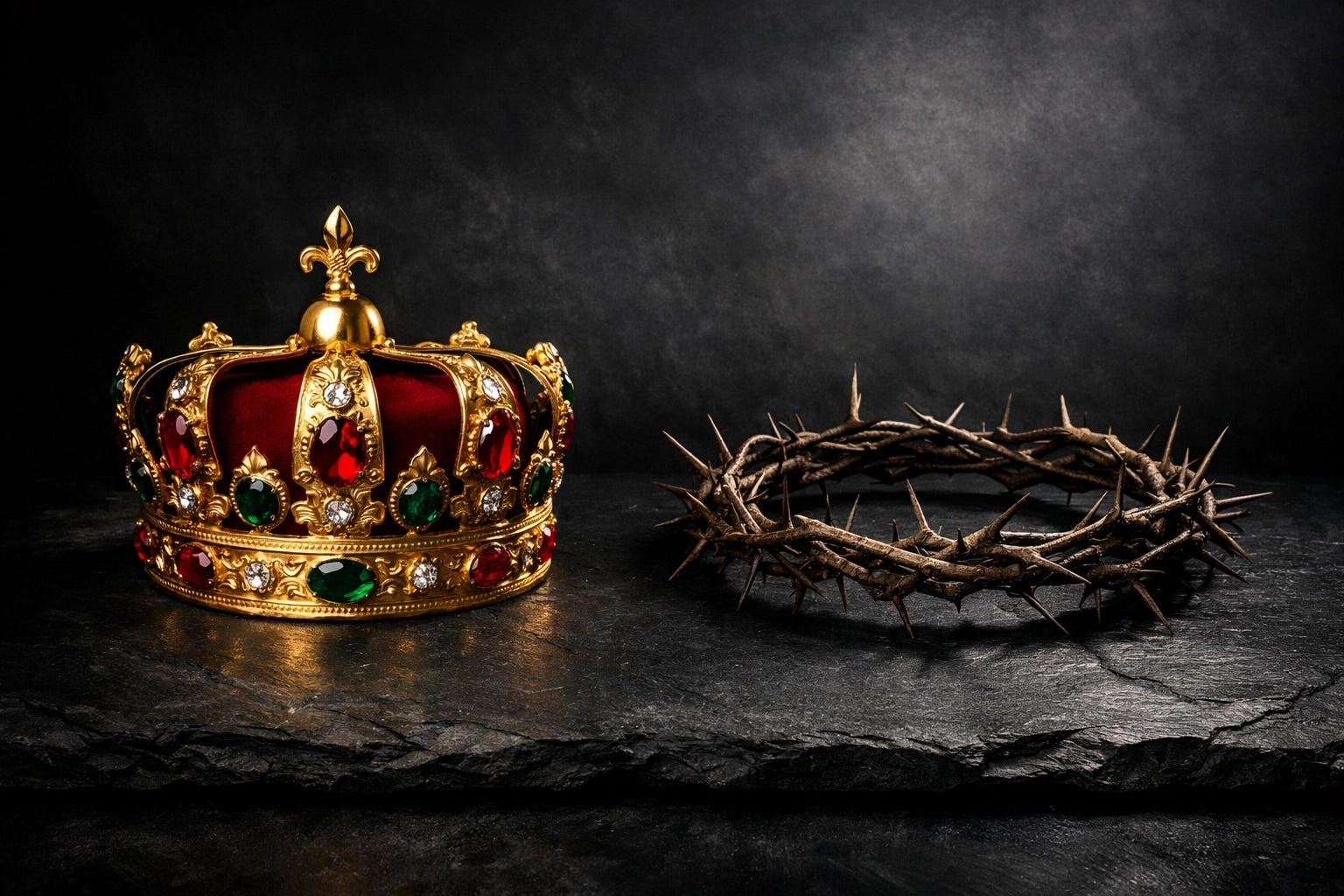
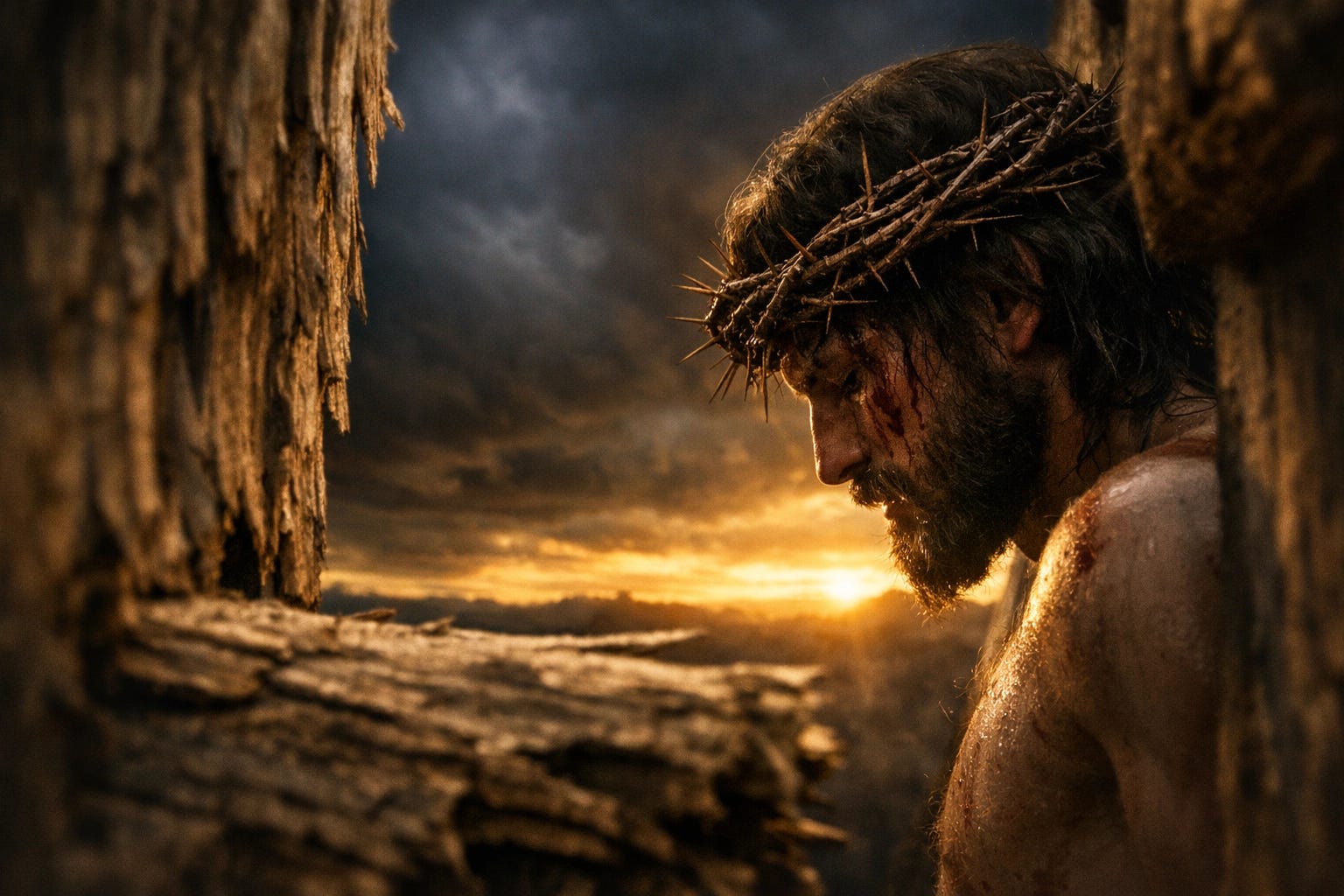
Jesus of Nazareth presents an entirely different model of kingship that remains offensive to the worldly mind. His crown consists of sharp thorns pressed into his brow as an instrument of mockery and pain. This crown signifies a King who lays down his life for his friends rather than demanding their blood for his own glory. While earthly kings revel in the trappings of status, Christ embraces the indignity of the cross to achieve a victory that no army could ever secure. The purple robe draped over his shoulders served as a joke to the Roman soldiers, yet it actually revealed the profound truth of his sacrificial authority. We must learn to distinguish between the outward appearance of power and the internal reality of spiritual truth.
The Political Messiah Trap
Humanity possesses a persistent and dangerous tendency to seek spiritual fulfillment through secular institutions. We often fall into the trap of believing that the right leader or the perfect policy will usher in a period of utopian peace. This desire for an earthly paradise remains seductive because it promises immediate relief from the burdens of life without requiring a change of heart. When we regard political figures in messianic terms, we inadvertently create idols out of mortal men who inevitably fail us. This reliance on the state to provide what only God can offer leads to a cycle of hope followed by crushing disillusionment.
Our modern culture frequently treats elections as if they were religious crusades where the stakes involve the very salvation of our souls. We invest our candidates with a level of authority that belongs solely to the Creator of the universe. This misplaced devotion distorts our understanding of natural law and shifts our focus away from the eternal. Instead of looking to the cross for our identity, we look to the ballot box or the latest policy platform. We must remember that every earthly kingdom remains temporary and flawed while the Kingdom of God stands forever. You can explore more about our posture at the foot of the cross by visiting 5 Lessons About Us at the Cross.
1776 and the Seal of Divine Authority
The founders of the American experiment recognized the inherent danger of earthly tyranny and sought to ground their authority in something higher than the whim of a king. During the summer of 1776, a committee consisting of Jefferson, Adams, and Franklin proposed a design for the official seal of the United States that leaned heavily on biblical imagery. Franklin suggested an image of Moses standing on the shore of the Red Sea while the waters overwhelmed the chariot of Pharaoh. This choice emphasized that the true Sovereign of a nation remains the Almighty rather than any human monarch. Their proposed motto, “Rebellion to Tyrants is Obedience to God,” serves as a stark reminder that human laws must align with divine truth to remain legitimate.
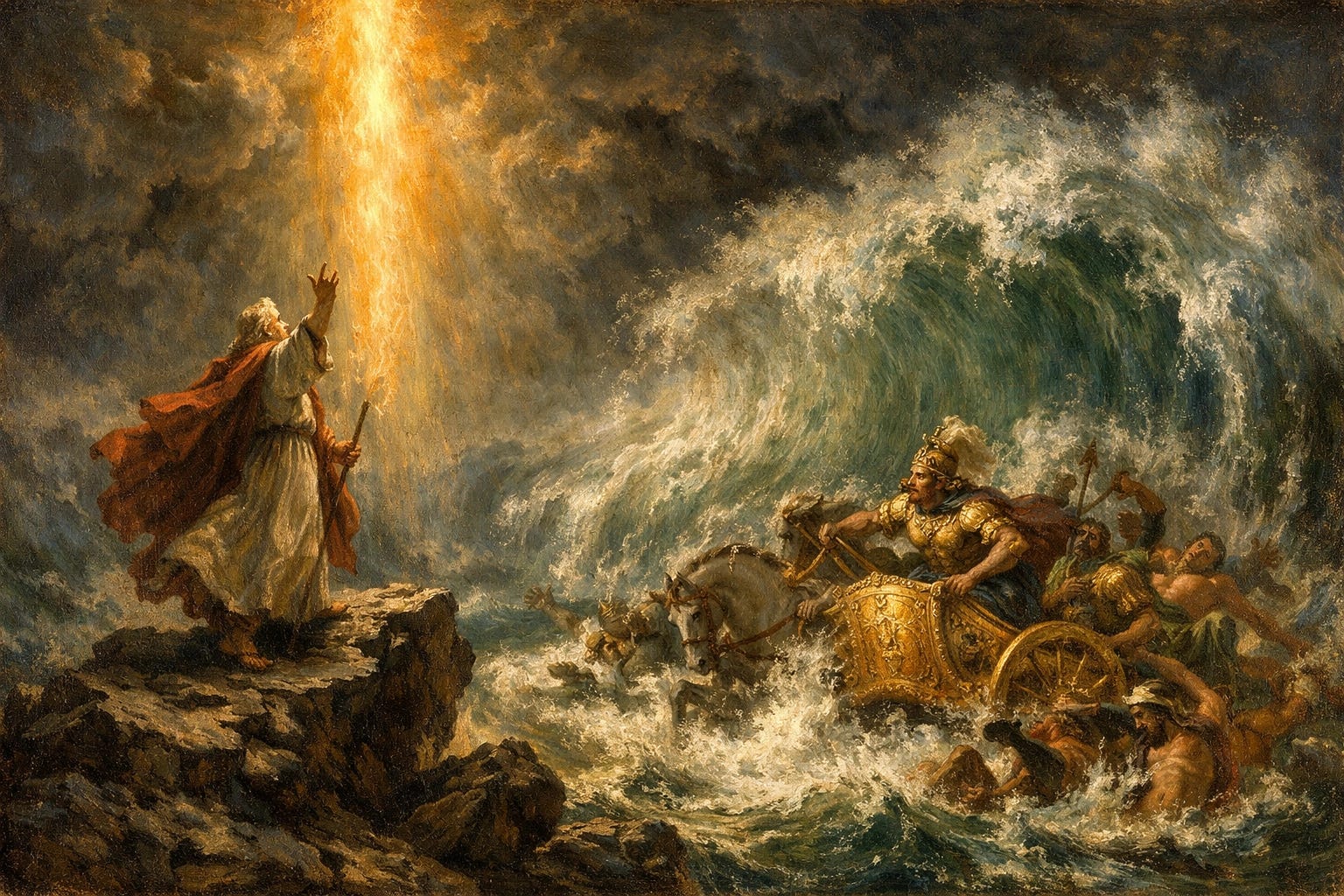
This historical perspective highlights the fact that our liberties derive from our Creator rather than from the generosity of the government. When a ruler attempts to seize the place of God, he becomes a tyrant who loses the moral right to govern. The imagery of Moses and Pharaoh illustrates the eternal struggle between those who demand worship and those who obey the Divine command. We must maintain this clarity today as we navigate a world that increasingly demands we surrender our consciences to the state. Recognizing God as the ultimate King allows us to participate in politics without being consumed by it. For a deeper look at why our culture needs to return to these roots, check out Why a Post-Christian West is Returning.
The Realism of the Good Thief
Amidst the chaos and mockery of the crucifixion, the figure known as the Good Thief offers us a masterclass in spiritual realism. While the other criminal joined the crowd in railing against Jesus, this man recognized his own guilt and the innocence of the one hanging beside him. He saw past the blood, the thorns, and the apparent defeat to perceive a King with a coming kingdom. His request, “Jesus, remember me when you come into your kingdom,” remains one of the most profound acts of faith recorded in Scripture. He did not ask for a political revolution or an immediate escape from his physical suffering; instead, he sought admission into a spiritual reality.
This criminal perceived the Truth through the lens of natural law even while the religious experts of his day remained blind. He understood that justice required his punishment, yet he also sensed the presence of mercy in the person of Christ. His eyes were opened to the fact that the man on the middle cross was the only one capable of offering true paradise. This recognition stands as a challenge to every one of us who often prioritizes physical comfort over spiritual integrity. True freedom begins when we admit our brokenness and turn toward the only source of absolute truth.
The Temptation of Gourmet Slavery
The Israelites who wandered in the desert often looked back at their time in Egypt with a distorted sense of nostalgia. Despite their heavy chains and the cruelty of their taskmasters, they complained about the lack of gourmet food in the wilderness. They preferred the security of slavery with a full stomach over the challenges of freedom in the presence of God. This phenomenon of “gourmet slavery” persists in our modern world where many people are willing to trade their fundamental liberties for the promise of state-provided security and comfort. We see this in the expansion of government programs that foster dependency and discourage the exercise of personal responsibility.

Choosing the hard road to spiritual freedom requires a willingness to endure the desert and trust in the providence of God. The false messiahs of our age promise a paradise of convenience while slowly eroding the moral fabric of society. They offer the “fleshpots of Egypt” in exchange for our silence and our souls. We must resist the urge to value our material standard of living above our spiritual callings. The cross reminds us that true life involves sacrifice and a rejection of the easy path of compromise. Christ remains the only answer to the global hunger for meaning and purpose that politics can never satisfy. You can read more about this global reality at Jesus is the Only Answer to Our Global Search for Meaning.
The Invitation to True Paradise
The response of Jesus to the Good Thief provides the ultimate comfort for every soul navigating the wreckage of human history. “Truly, I say to you, today you will be with me in Paradise.” This promise transcends the rise and fall of nations, the outcome of elections, and the fluctuations of the economy. It reminds us that our true home exists beyond the reach of any earthly tyrant or political party. When we fix our eyes on the King who wears the crown of thorns, we find a peace that the world cannot give and certainly cannot take away.
We live in an age of great political tension and social upheaval, yet we can remain steadfast by anchoring our hope in the eternal. Let us reject the false promises of political messiahs and embrace the transformative power of the cross. By recognizing the divine authority that stands above all human institutions, we become better citizens of both the earthly city and the heavenly one. Our call remains to live with the realism of the thief and the courage of the martyrs, always pointing our neighbors toward the King who conquered death.
For further exploration of how we navigate these modern conflicts with a biblical perspective, please visit the Full Archive to see how faith informs every aspect of our culture.