
Why Religious Liberty is the Soul of the Republic
The American Experiment at 250 Years

![[HERO] The 250-Year Experiment: Why Religious Liberty is the Soul of the Republic](https://substackcdn.com/image/fetch/$s_!Dh5e!,f_auto,q_auto:good,fl_progressive:steep/https%3A%2F%2Fsubstack-post-media.s3.amazonaws.com%2Fpublic%2Fimages%2Ffe4ee266-e32c-44db-8a24-65da98bda87f_1536x1024.webp "[HERO] The 250-Year Experiment: Why Religious Liberty is the Soul of the Republic")
As America stands on the threshold of its 250th birthday, a recent commentary on the U.S. bishops’ latest religious liberty report warrants some consideration. The alarms being sounded are not some far-off, theoretical worry for philosophy classrooms. The issues are intensely real, day-to-day realities testing the true soul of the American experiment. And frankly, the questions raised cut deeper than most people realize.
This milestone invites us to reflect on what has always made America exceptional. The answer does not lie in GDP numbers or military hardware or even in the poetry of our founding documents, though those truly matter. The true heartbeat of the republic comes from something far more radical: religious liberty. Without this, the rest frankly falls apart. And the genius of our system is the recognition that religious liberty is the precondition for any authentic love of God or neighbor within a society.
Why Religious Freedom Is the Precondition for Love
Religious liberty is the very oxygen faith needs to breathe. Dignitatis Humanae, from the Second Vatican Council, offers this truth clearly. When faith is forced, love simply cannot be real. Only when we are free to choose can we return God’s invitation with sincerity, seeking His will beyond the coercion of temporal rulers.
In the American context, this has always meant something revolutionary. The system explicitly permits government no authority to define, mandate, or suppress religious belief or practice. The right to respond to God’s call is recognized as pre-political, meaning it’s older than any government program, older than any court ruling, and certainly older than any president, party, or political fad.
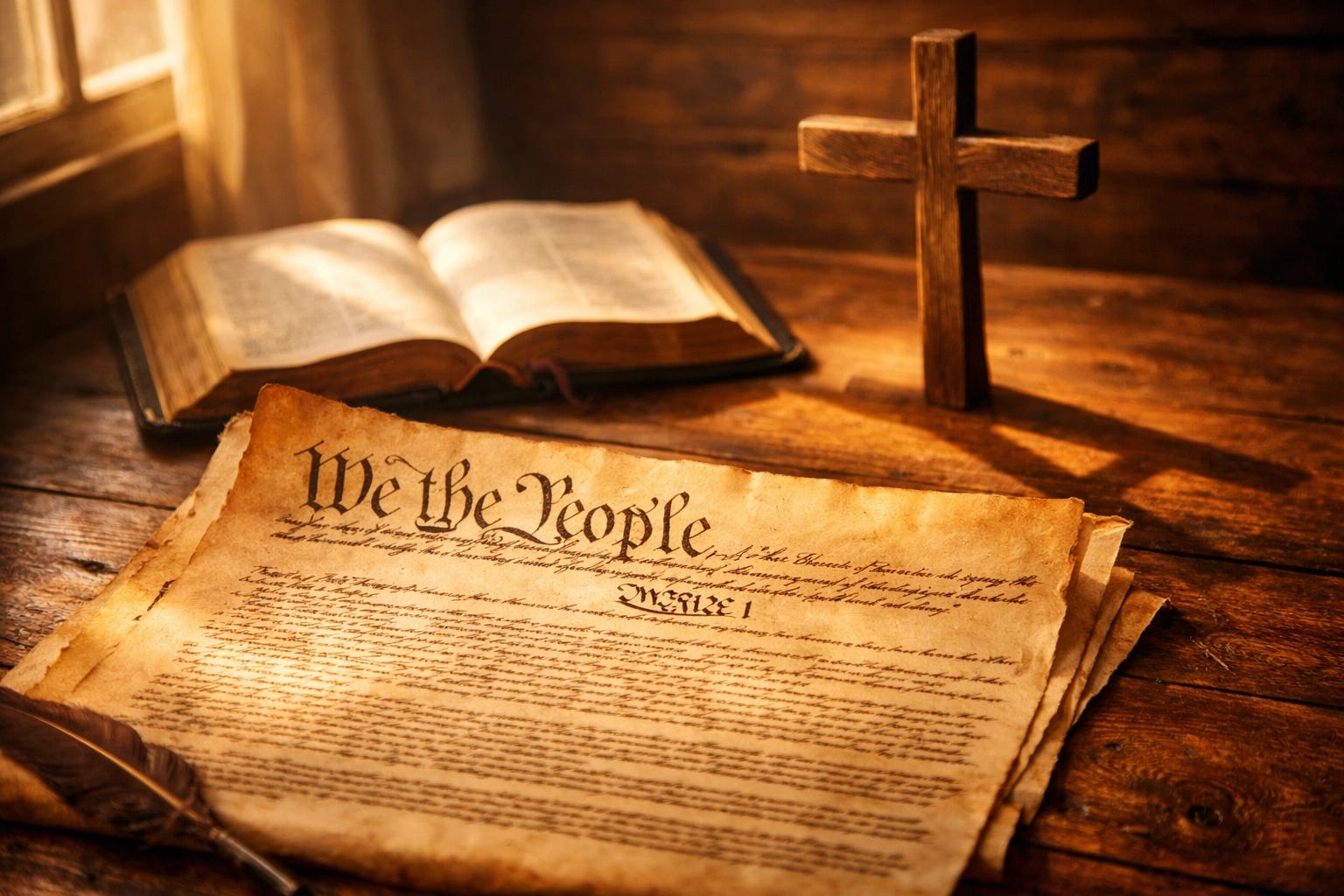
The separation of church and state, pioneered by early visionaries like Roger Williams and codified in the Bill of Rights, ensured that America would be a society where the government handles civil order. Political power stops at the door of the conscience. Without this freedom, love becomes an act of compliance rather than covenant.
The Mission Field Is All of Public Life
The modern narrative often tries to paint the Church, or religion more broadly, as just another special interest vying for its own seat at the government table. This is, simply put, a gross misreading. The Church engages as a missionary would for souls. Her very presence in the public square is a living witness to truth, mercy, and ultimately, salvation.
The Catholic Church in the United States serves millions through hospitals, schools, and countless charitable initiatives. None of this flows from government edict or tax breaks. The drive comes from the gospel imperative to serve Christ in the sick, the poor, the imprisoned, the immigrant, and the forgotten. The heart of Christian social action is the transformation of hearts and society.
This is why evangelization is not limited to Sunday worship or private prayer. Authentic living of the faith demands presence in every square inch of daily life, especially public life. Our call is to “perfect the temporal order with the spirit of the gospel.” This requires the freedom to act as Catholics in service, speech, worship, education, and yes: even politics: without stifling our convictions.
Threats Are Real: and They Come from Every Direction
The bishops’ assessment outlines a landscape facing threats from multiple fronts. Attacks on church property and violence directed at people of faith set off alarms about the country’s moral direction. The trend reveals hearts hardened against religious difference and reveals a spiritual poverty bubbling beneath the surface of a nation wrestling with its identity.
Federal grants sometimes inflict impossible choices on Catholic institutions: demanding they set aside their faith convictions as the price of participation. It becomes clear: participation in public life is being conditioned on watering down the heart of our religious witness. Catholic adoption agencies, schools, and hospitals provide the human face of Christ to society’s most vulnerable. When policy forces these organizations to sideline their beliefs, the very concept of religious neutrality is mocked.
Consider access to the sacraments for those in detention. This is an acid test for whether the nation takes seriously the inherent dignity of every soul. Regardless of the politics surrounding immigration, and let’s admit, there is a wide range of thought on border policy among the faithful, the right of each person to receive grace through the Church’s sacraments remains inviolable. At the core, this is about acknowledging that there are claims on the soul that no government may rightly deny.
Roots Run Deeper Than Politics
Across the world, many regimes know only the marriage of state and religion: imposing doctrine by law, imprisoning or silencing the dissenters, killing the flame of conscience. America’s 250-year experiment was exactly the opposite. Here, at least in principle, conscience carves out sacred space, protected by law, into which neither king nor Congress may bully or intrude.
The architects of this republic accepted that people’s rights come from the Creator, not from the state. The Founders understood that to guarantee religious liberty was to guarantee the conditions for a good society. The First Amendment drew a line around the government’s powers, reserving religious allegiance for God alone. These men: imperfect as they were: saw that imposing a state religion or persecuting nonconformists would wound both faith and the common good. George Washington said it well: government in America “gives to bigotry no sanction, and to persecution no assistance.”

Consecration and the Real Role of the Church
Later this year, the U.S. bishops will consecrate the nation to the Sacred Heart of Jesus. This is no act of nostalgia or PR. It is a spiritual anchor, a profound recognition of the real battle lines. The Church does not traffic in manipulation or coercion. Instead, she pours out grace, mercy, and service, trusting in the sovereignty of Christ and the freedom He has won for every human being.
Consecrating the nation is a missionary act: a petition for Christ’s reign to shape every law, every heart, every policy, and every cultural conversation. As Catholics, this moment calls us to pray, to repent where needed, and then to work unashamedly for the right to serve God freely and faithfully.
The Republic at 250: Where Do We Go From Here?
Anniversaries are meant to do more than mark the passage of time. They call us to take stock of where we stand. Two-hundred and fifty years in, the American experiment faces old temptations: the urge to use government power to silence conscience, the impatience to force uniformity, the rising secularism that treats faith as a private hobby with no place in the wider world.
True liberty, including religious liberty, always hangs by a thread. Its enemies are rarely monsters or obvious villains. Sometimes they come wearing the face of security, progress, or good intentions. Yet the outcome is the same, a shrinking space for conscience, a culture where functional atheism creeps in through the cracks of indifference and bureaucratic overload.
The response is not panic or partisan outrage. It begins with gratitude: for the blessings of liberty handed down through generations, bought at great cost. It matures into courage, the kind that refuses to hide the light of Christ, words of hope, works of mercy, or uncomfortable truths required by fidelity to the Church. It culminates in genuine love: a love that can only exist where freedom truly reigns.
Answering the Summons
The bishops have sounded a summons. Whether you worship in the city or the countryside, whether you teach, heal, build, write, or serve, this is a moment to recommit to the American promise: the right to live and share your faith in public, unashamed and uncoerced.
At 250 years, the republic needs souls on fire with the freedom only Christ brings. The world aches for people anchored in natural law and the power of the gospel. Evangelization must leave the comfort zones and take root in the messy, bruised, and beautiful terrain of daily life in America.
To preserve religious liberty is to keep alive the possibility of transformation: from neighborhoods to the nation. It means living, serving, and sometimes suffering in ways that testify to Who really rules over every human heart. For Christians, the time is always now, and the mission field is everywhere the Republic flies her flag.