
The Trump Administration Is Betraying the Unborn
An Unfortunate Disappointment to Christians

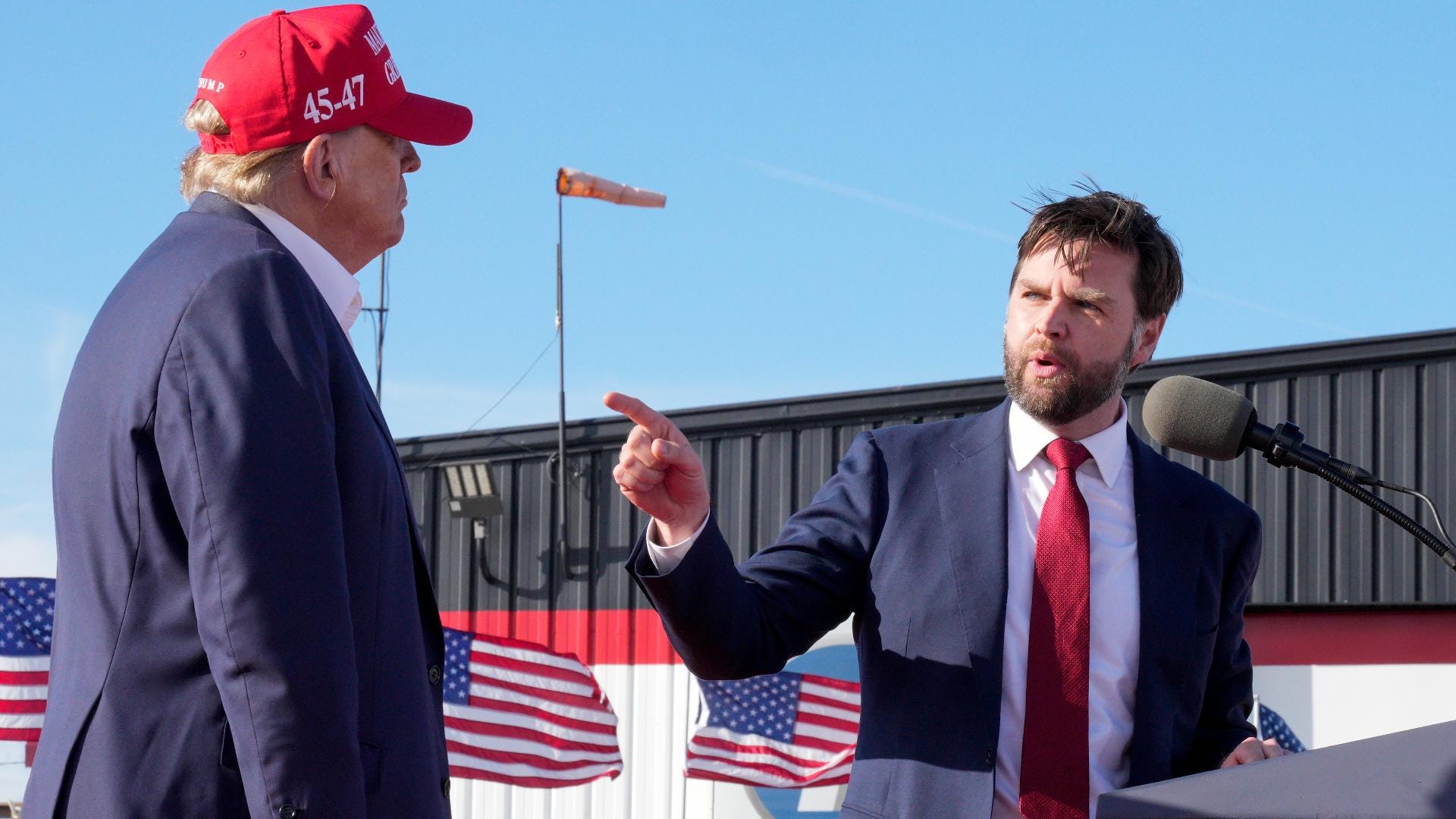
Reports that the Trump administration restored millions of dollars in Title X funding to Planned Parenthood, followed by public denials of awareness from President Donald Trump and Health and Human Services Secretary Robert F. Kennedy Jr., have left the pro-life movement staring at a political landscape that feels unfamiliar and deeply unsettling. Consequently, what was once a perceived settled alliance between the Republican party and the cause of life has entered historically uncharted territory, where long-standing assumptions no longer hold equal validity.
According to reporting, the Department of Health and Human Services restored Title X funds that had been withheld earlier, thereby allowing Planned Parenthood and similar clinics to submit reimbursement claims for contraception and related services for low-income patients. Formally speaking, the Hyde Amendment still remains in place, and federal dollars continue to be barred from directly funding abortion procedures. Practically speaking, however, taxpayer money now flows again to an organization responsible for hundreds of thousands of abortions each year, thereby subsidizing infrastructure, personnel, and operational capacity. This distinction between direct and indirect support has long functioned as a moral fig leaf in Washington, although its persuasive power has worn thin among those who understand how large institutions operate.
When asked about the reports, President Trump responded, “I don’t know anything about that,” while Secretary Kennedy added, “I have not heard that.” These statements may reflect genuine distance from agency-level decisions, but my concern is that they are political deflection. Either way, the effect remains the same, since policy outcomes can shape societal moral reality far more decisively than flippant press-room disclaimers. In this respect, the controversy has already accomplished something jarring, since it has forced pro-life advocates to confront the limits of accessible and familiar politics and the dangers of outsourcing moral vigilance to politicians, hoping that they will be sympathetic.
Reactions within the pro-life movement have been swift and divided. Organizations such as Live Action and Susan B. Anthony Pro-Life America have demanded a complete defunding of Planned Parenthood and the immediate reinstatement of the Protect Life Rule from Trump’s first term. Lila Rose of Live Action declared, “PP kills 1,102 babies daily with your taxpaying dollars. We must fully defund abortion corporation Planned Parenthood!” Their rhetoric here reflects deep frustration, and rightly so, since the first Trump administration had demonstrated that executive action from the office of the president could actually sever Title X funds from abortion providers. The absence of such action in the second term has therefore raised troubling questions about the political will of this administration.
At the same time, defenders of the administration have argued that legal constraints left them few viable options, but this claim rings hollow when weighed against the administration’s otherwise aggressive posture across other regulatory domains. This tension has been magnified by developments surrounding the abortion drug mifepristone, which now accounts for roughly two-thirds of abortions nationwide. Despite expectations of tighter restrictions, the Department of Justice chose to defend Biden-era rules allowing the drug to be prescribed through telehealth and shipped by mail. Moreover, the Food and Drug Administration approved a generic version of mifepristone even as an internal review of the drug’s safety and efficacy remained incomplete. These decisions effectively nationalize abortion access by mail, rendering state-level protections increasingly meaningless.
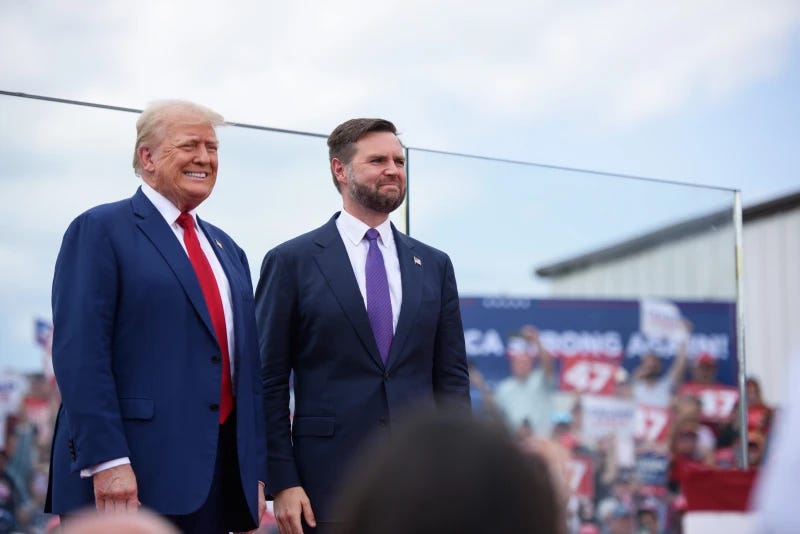
The cumulative effect of these policies has led some commentators to conclude that the Trump-Vance administration represents the most anti-life Republican administration in modern history, a claim that would have sounded implausible only a few years ago. Vice President JD Vance, a Catholic convert who once articulated a robust critique of abortion culture, has offered little public explanation for the trajectory of his administration. Press secretary Karoline Leavitt, also Catholic, has likewise remained largely silent on the moral implications of these choices. Silence, in politics, often functions as a covert policy instrument, especially when it shields leadership from potential dissent of the electorate.
Historically speaking, this moment truly stands without precedent in Republican history. Ronald Reagan and George H. W. Bush defended the Hyde Amendment with unwavering clarity. George W. Bush expanded conscience protections through the Weldon Amendment. Even Trump himself, during his first term, pledged to make Hyde permanent law. Recent suggestions from Trump urging Republican lawmakers to show “flexibility” on Hyde during budget negotiations therefore mark an alarming rupture with five decades of party orthodoxy. Until very recently, even prominent Democrats supported Hyde, including Joe Biden prior to 2020. That bipartisan consensus has now collapsed, leaving the pro-life cause politically isolated in ways unseen in American history.
This erosion of influence has exposed a deeper strategic failure within the pro-life movement itself. Years of “hailing” sympathetic leaders, celebrating symbolic victories, and amplifying religious optics have simply depleted the movement’s leverage. There is an adage which observes, “You can’t crown a king, then expect to hold him accountable.” By insisting that Trump represented an unimpeachable champion of life, many leaders inadvertently disarmed their own capacity for resistance when needed, as it is certainly needed now. Consequently, when policy drift became policy reversal, the movement found itself struggling to regain credibility and a foothold among its own supporters.
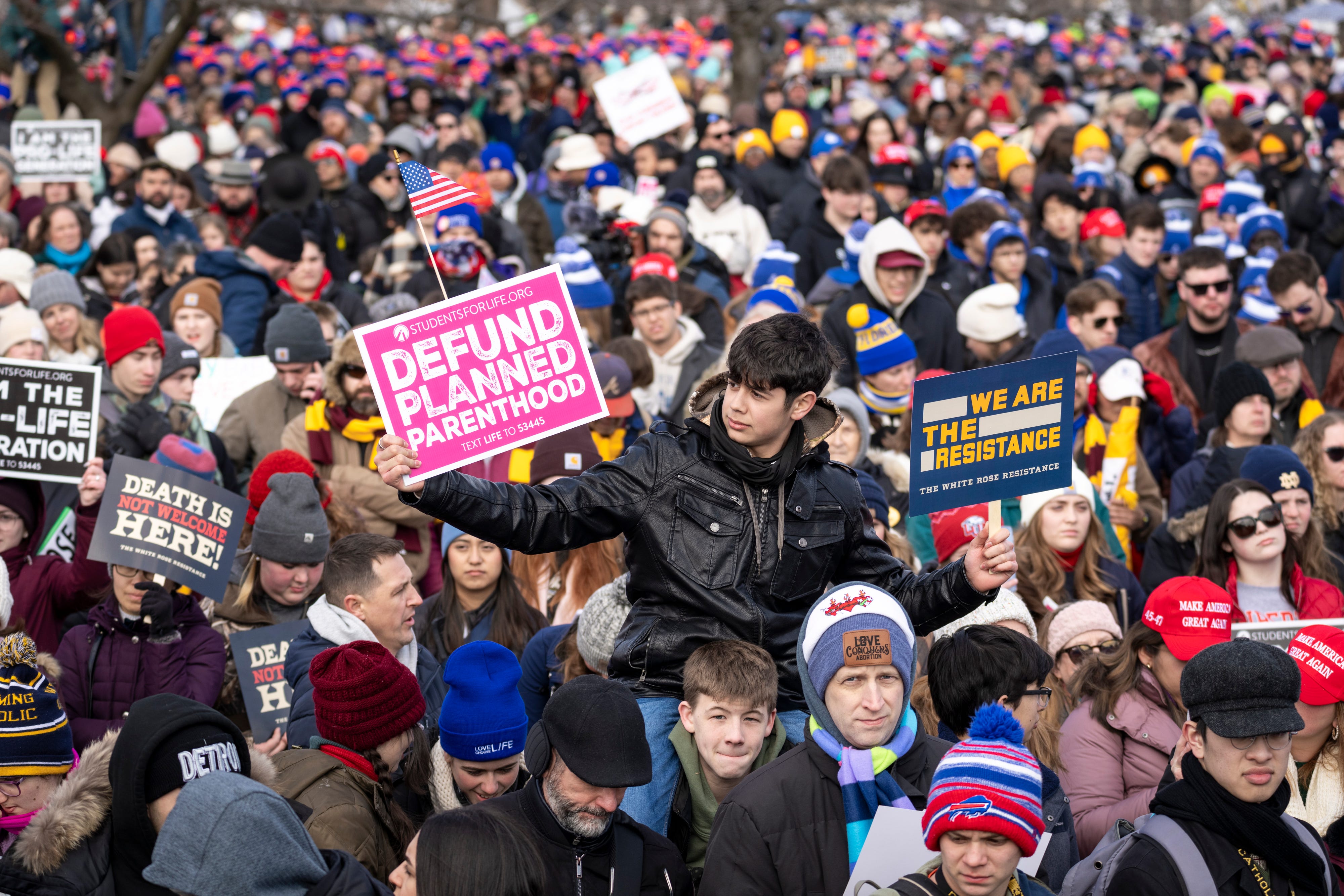
The forthcoming March for Life now looms as an occasion of real moral reckoning. Will speakers confront the uncomfortable truth that current federal policy facilitates abortion access at a scale rivaling even the pre-Dobbs era, or will they continue to pursue proximity to power in hopes of incremental concessions? This question carries existential weight, since the fight for life in the United States has become indescribably harder. Mail-order abortion, bureaucratic funding streams, and political fatigue have combined to create a landscape where morality demands far greater courage than before.
Against this backdrop, the Church’s teaching offers neither partisan comfort nor strategic ambiguity. Saint John Paul II wrote with prophetic urgency in Evangelium vitae: “Responsibility likewise falls on the legislators who have promoted and approved abortion laws, and, to the extent that they have a say in the matter, on the administrators of the health-care centers where abortions are performed. In this sense abortion goes beyond the responsibility of individuals and beyond the harm done to them, and takes on a distinctly social dimension. It is a most serious wound inflicted on society and its culture by the very people who ought to be society’s promoters and defenders.” These words leave little room for procedural evasions or jurisdictional excuses. Leaders have moral accountability, even if they don’t recognize or admit it.
The Congregation for the Doctrine of the Faith reinforced this teaching in 2002, stating that “those who are directly involved in lawmaking bodies have a ‘grave and clear obligation to oppose’ any law that attacks human life,” adding that “it is impossible to promote such laws or to vote for them.” The Church therefore frames abortion as a covenantal rupture that implicates entire societies, especially when political leaders normalize or facilitate it through law and policy.
From a biblical covenantal worldview, life belongs to God, and political authority exists under divine judgment. Israel’s kings learned this lesson the hard way through exile and ruin when they sanctioned injustice for the sake of their own political agendas. Modern America now faces a parallel temptation— our politics have traded moral coherence for electoral convenience, and the unborn are paying the price. The social cost of such bargains rarely appears immediately, although history records their eventual price with brutal testimony.
Yet Christian hope never rests upon political administrations or party platforms. It rests upon Jesus Christ, the Lord of life, who entered history precisely when political powers failed to recognize the dignity of the vulnerable. The Church therefore calls the faithful to renewed vigilance, principled and consistent resistance, and sacrificial witness. The road ahead will demand greater clarity, fewer illusions, and a willingness to speak the truth loudly and clearly, even when access to political power fades. In that sense, this moment, grim as it appears, may well purify the movement and re-center it upon a stalwart appeal to the Gospel, and not simply incremental victories in policy. Only then can the defense of life recover its social moral authority, grounded in covenant fidelity to Christ, who remains the final judge of nations and the unfailing hope of the unborn.