

The Pope is Reclaiming Europe’s Spiritual Heart
Leo XIV’s High-Stakes Return to the Great Cathedrals

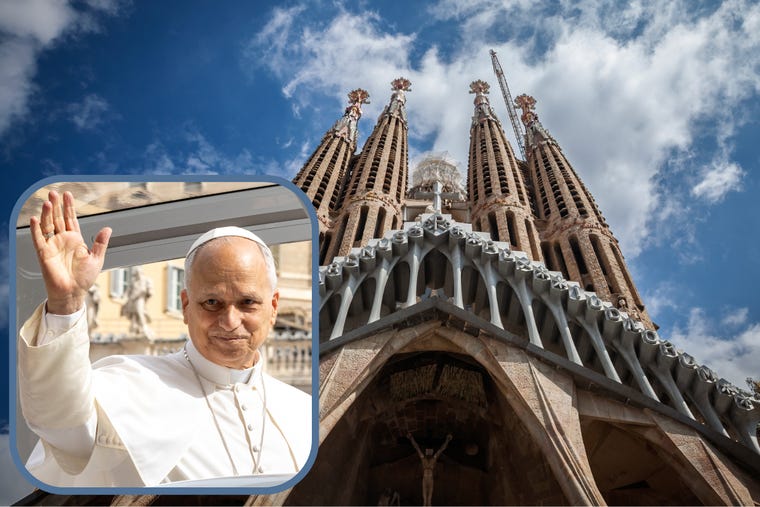
The secular bureaucrats residing in the glass towers of Brussels likely experience a profound sense of spiritual vertigo as they witness the strategic movements of Pope Leo XIV across the European continent. These administrative elites have spent decades pretending that the Christian soul of the West died during the Enlightenment. However the current Roman Pontiff evidently intends to prove that the heartbeat of Christendom remains exceptionally strong within the ancient stone of our most majestic cathedrals. The upcoming journey of the Pope to Spain and France signifies a deliberate effort to re-consecrate a continent that has spent too much time wandering through the arid wilderness of post-modernity. This is essentially a high-stakes reclamation of sacred geography that ignores the sterile preferences of the political class in favor of the transcendent beauty of the Divine.
The primary centerpiece of this European incursion involves the blessing of the massive Tower of Jesus Christ at the Sagrada Família in Barcelona. This architectural marvel represents the absolute antithesis of the boring and functional boxes that dominate modern urban planning. Andoni Gaudí designed this basilica as a “monk in the city” who understood that the metropolitan landscape was frequently a spiritual desert. He believed that his work should function as a blooming oasis where the Creator could meet His creatures face to face without the interference of secular distractions. The blessing of this central tower marks the centenary of the death of Gaudí and it serves as a massive signal to the world that the Gospel remains the only force capable of building something that actually lasts.
The Architect of the Sacred Oasis
Gaudí lived a life of extreme simplicity and profound devotion while he supervised the construction of what many consider the most important religious building of the modern era. He refrained from seeking the hollow approval of the socialites of his day and instead focused his entire creative energy on a liturgical plan that mirrors the celestial order. The Sagrada Família exists in the center of a cloister which Gaudí conceived as a sacred garden representing the earthly paradise. The city outside the cloister was essentially an urban desert in his eyes. He believed that the new creation began with the construction of this church and that the surrounding desert would eventually begin to bloom as the sacred space expanded.
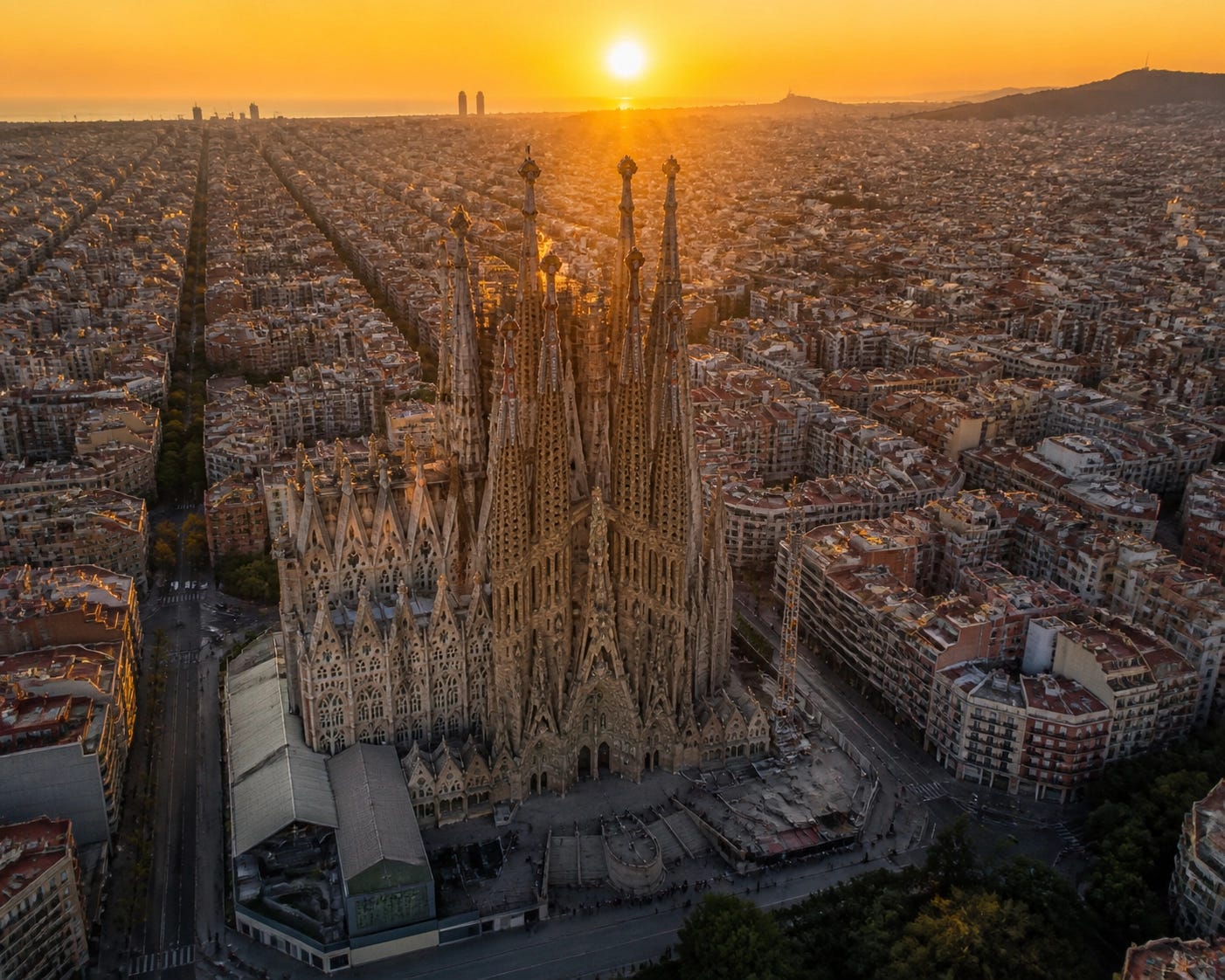
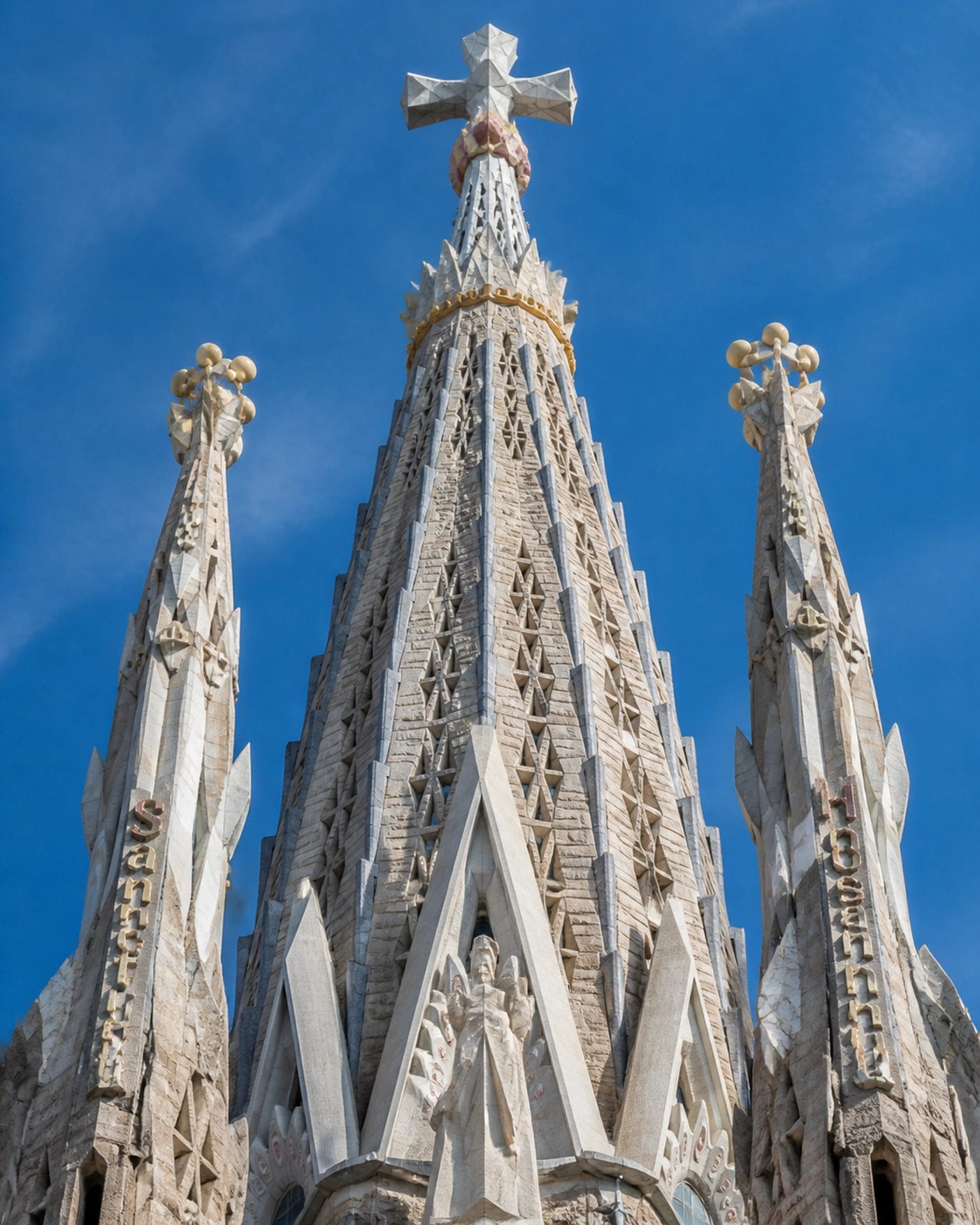
The external features of the basilica communicate the Gospel with a level of precision that puts most modern preaching to shame. The bell towers rise toward the heavens as strikeing exterior features that command the attention of everyone in Barcelona. There are four towers on each of the two side facades and the final design includes eighteen towers in total. The highest tower belongs to Christ while others belong to the evangelists and the Virgin Mary. The words Sanctus and Hosanna in excelsis are carved into the stone near the top of these towers. These words introduce the great Eucharistic Prayer of the Mass and they remind the city that the liturgy of the earthly church participates in the eternal liturgy of heaven. Every single detail of the building contains a profound theological meaning. The eastern facade focuses on the Nativity while the western facade focuses on the Passion of the Lord. These facades present the church as a sacred passageway where the sun of Christ passes through the building from birth to redemptive death.
The Strategic Trio of Towers
Leo XIV is essentially conducting a spiritual pincer movement by visiting a trio of the most important churches in Catholic Europe. Following his time in Barcelona he will travel to the “eldest daughter of the Church” to visit the magnificent cathedrals of Paris and Strasbourg. The decision to prioritize these sacred sites reveals a calculated effort to remind the French people of their true identity. The Cathedral of Paris recently reopened after the devastating fire of 2019 and its restoration signifies the resilience of the Catholic spirit in the face of destruction. The Pope failed to attend the initial reopening ceremony but his upcoming visit confirms that he views this cathedral as a vital organ in the spiritual body of Europe.
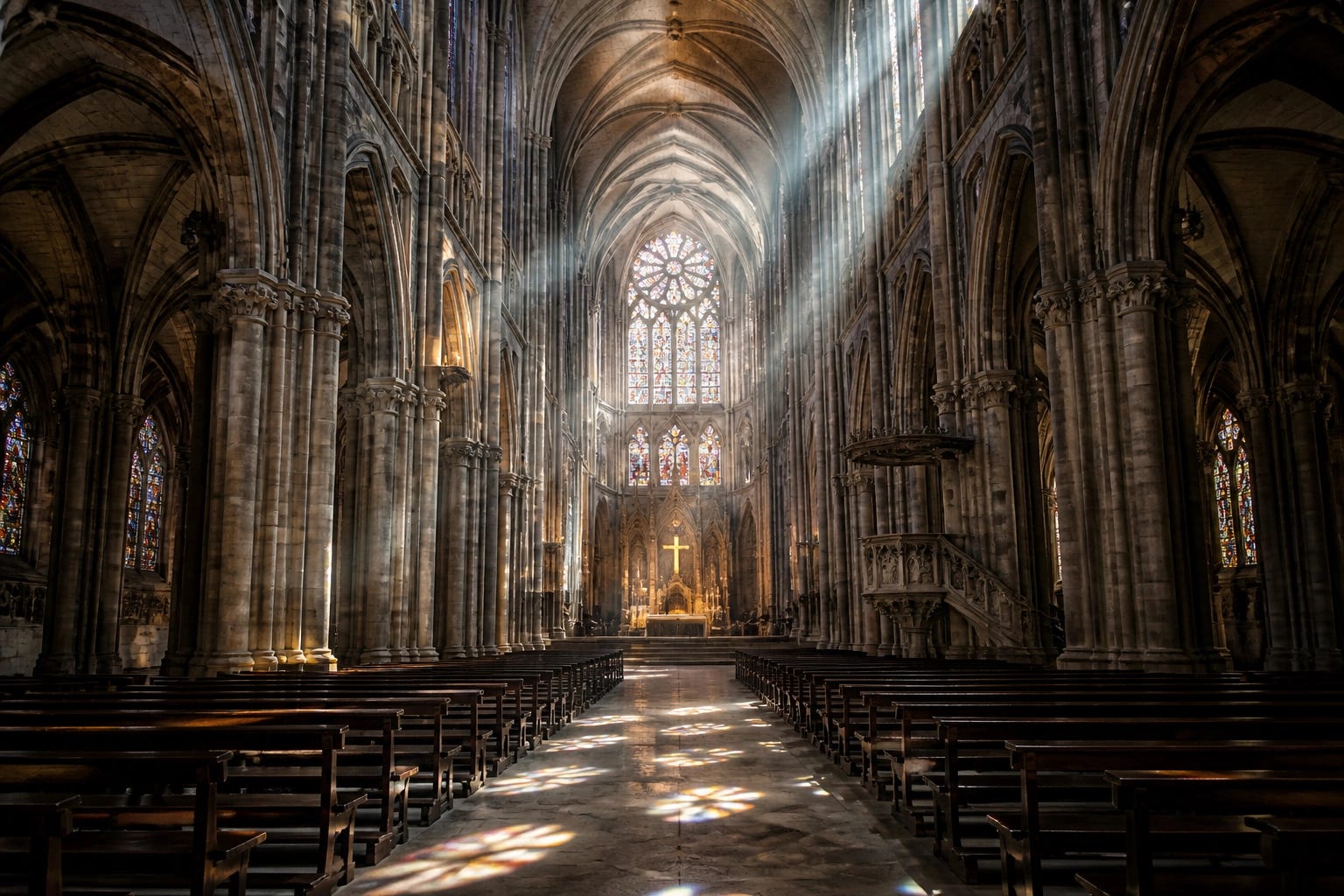
The inclusion of the Cathedral of Strasbourg on the itinerary is especially pointed given the proximity of the European Parliament. Previous pontiffs have sometimes visited the parliamentary buildings while they avoided the local cathedral. Leo XIV ignores that precedent by focusing his attention on the Gothic masterpiece that has served as a symbol of the crossroads of Europe for over a millennium. By blessing the altars of Barcelona and Paris and Strasbourg the Pope creates a spiritual network that bypasses the secular authorities. He is effectively encircling the administrative centers of the European Union with the timeless authority of the Cross. This strategy suggests that the future of the continent depends on its relationship with the Divine rather than its adherence to bureaucratic regulations. For those interested in the history of this spiritual struggle the archive provides ample context regarding the decline and rebirth of Western faith.
The Altar Over the Assembly
The contrast between the political and the spiritual will manifest most clearly during the papal visit to the Spanish Cortes. For the first time in history a Pope will address a joint session of the Chamber of Deputies and the Senate. This event will likely involve a great deal of diplomatic theater and polite applause from politicians who regularly vote against the principles of Natural Law. However the real power of the trip resides in the blessing of the Tower of Jesus Christ rather than the speech in the parliament. The words spoken to the politicians will pass away as soon as the next election cycle begins yet the tower will continue to proclaim the sovereignty of Christ to the city of Barcelona for centuries.
The Pope recognizes that the political assembly is ultimately subordinate to the altar. He uses his address to the Cortes to remind the leaders of Spain of their global responsibility to defend human dignity and promote peace. Yet he understands that these values lack a firm foundation without the Christian tradition that built the very cathedrals he is visiting. The itinerary includes a Corpus Christi procession in Madrid which serves as a public demonstration of the Real Presence of Christ in the streets of the capital. This act of public worship asserts that the Lord of history is the true ruler of the nation. You can read more about why we have no political savior in our previous discussion on the limits of secular governance.
Reclaiming the Vocation of Europe
The secular elites frequently describe Europe as a simple institutional construct or a collection of economic agreements. Leo XIV describes the continent as a historical subject with a global responsibility and a community of peoples called to rediscover their vocation. This vocation is essentially the promotion of a civilization of love that recognizes the inherent dignity of every human person. The Pope integrates the concerns of his predecessor regarding refugees and the marginalized by visiting migrant centers in the Canary Islands. He demonstrates that a robust defense of Christian identity is inseparable from a compassionate response to human suffering.
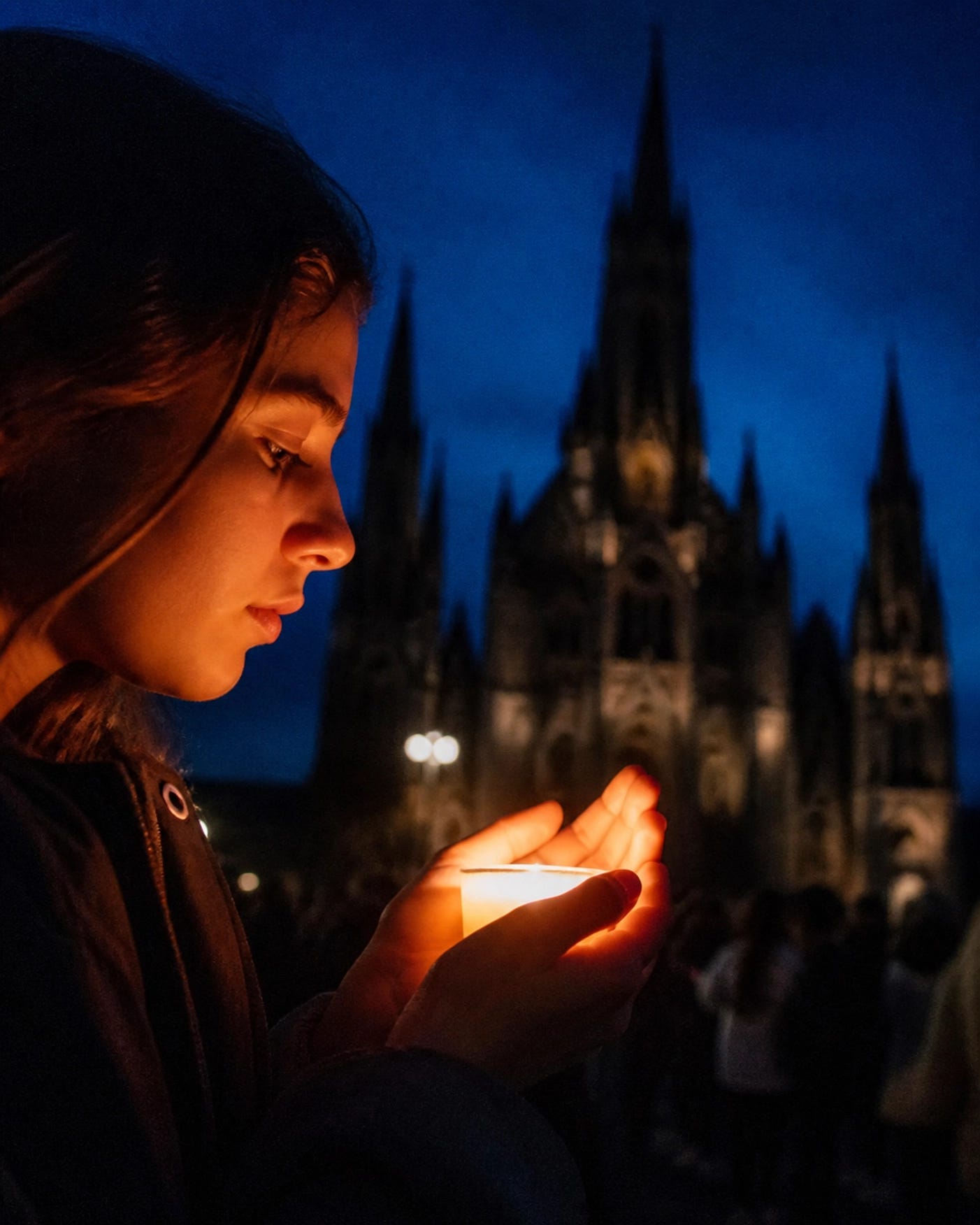
The journey to the great cathedrals serves as a call to the people of the West to abandon the desert of secularism and return to the garden of the Church. The “Monk in the City” showed us that beauty is a primary weapon in the struggle for souls. The massive towers of the Sagrada Família and the ancient naves of Paris and Strasbourg are not merely museums of a dead past. They are the launchpads for a new evangelization that seeks to transform the heart of the continent. The re-consecration of Europe is a high-stakes endeavor because the alternative is a slow descent into cultural oblivion. For a deeper look at why a post-Christian West is returning to its roots you should check out this analysis.
Leo XIV understands that the stones of these cathedrals cry out even when the people are silent. He chooses to bless the highest tower because he knows that the world needs to look up from its screens and its ledgers to see the sign of the Son of Man. The blessing of the Tower of Jesus Christ is a declaration that the desert is beginning to bloom once again. The Pope is reclaiming the spiritual heart of Europe because he knows that without a heart the body of the West will surely perish. We must pray that the people of Europe recognize this visitation and find their way back to the beauty of tradition. The towers are rising and the bells are ringing and the invitation to the feast is open to all who have ears to hear.