

Murder is Not "Death with Dignity"
The West is Deliberately Killing Itself

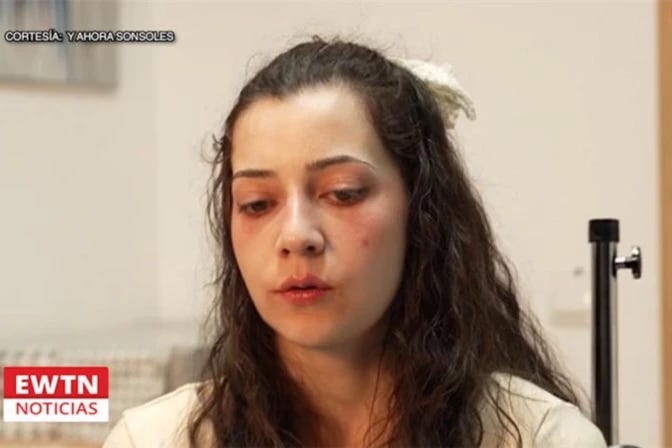
I came across a news article about a 25 year old young woman, Noelia Castillo Ramos, who was euthanized in Spain despite her Parents’ Objections. Her case exposes the failure of Spanish euthanasia laws that facilitated her suicide without her having received prior mental health treatment. This evil is becoming more prevalent in the West and it should be a cause for real concern and alarm. The contemporary world frequently champions a radical version of personal autonomy suggesting the ultimate expression of liberty remains the power to decide the timing of one’s own departure from this life. This distorted view of freedom prioritizes the individual will above the objective value of human existence, which essentially strips the person of their inherent dignity by reducing their life to a disposable commodity. When a culture begins to celebrate the choice of death as a triumph of the spirit, it effectively masks a deep-seated abandonment of those who suffer the most under the weight of psychological trauma or emotional despair. The illusion of sovereign autonomy creates a vacuum where the community once stood, leaving the broken and the weary to face their darkest moments with the cold comfort of a state-sanctioned exit. True freedom requires a foundation in truth and responsibility toward others, yet our modern era seeks to replace these pillars with a nihilistic right to self-destruction.

The tragedy of our current era lies in the reality that society possesses the technological means to save lives while simultaneously lacking the moral courage to insist upon the sanctity of those lives. We find ourselves in a situation where the state, which exists primarily to protect the vulnerable, abdicates its primary moral responsibility to safeguard the common good by facilitating the suicide of its citizens. Rather than providing the necessary resources for mental health healing and spiritual restoration, governments choose the path of least resistance by offering a lethal needle instead of a steady hand. This failure represents a fundamental breach of the Natural Law because the preservation of life stands as the foundational principle of any just society, given that every other right flows from the basic right to exist. Any legislative body that dares to redefine the value of human life based on subjective feelings of “quality” or “usefulness” oversteps its legitimate authority.
Legislators and social commentators often frame these lethal interventions as acts of “mercy,” although they actually represent a profound failure of the imagination and a lack of genuine compassion. True compassion, derived from the Latin cum passio, means to suffer with another person, which necessitates a commitment to stay present through the duration of their agony. The culture of death, however, seeks to eliminate the sufferer rather than the suffering itself, which reveals a terrifying impatience with the human condition and its inherent limitations. When we tell a young person struggling with the scars of childhood trauma that their life is legally eligible for termination, we confirm their deepest fears that they are beyond help and devoid of value. This message functions as a catastrophic betrayal of the generational contract, wherein the elders of a society are supposed to offer hope and wisdom to the youth, rather than a bureaucratic path to the grave.
The Gospel of Life provides the only substantive answer to this growing darkness because it recognizes that every human being is created in the image and likeness of God, which gives them an unalienable worth regardless of their mental state or physical ability. Jesus is the only answer to our global crisis of meaning because He entered into human suffering to transform it from within, showing us that even the darkest valley can be a place of encounter with the Divine. When we look at the cross, we see that suffering remains a mystery to be lived rather than a problem to be solved through chemical intervention. The Christian response to the brokenhearted involves the “Remedy of Self-Gift,” which requires us to offer our time, our ears, and our very lives to those who feel they have nothing left to give. This radical hospitality of the soul stands in stark contrast to a medical system that views death as a legitimate therapeutic outcome.
We must also recognize that the “freedom” promised by secular humanism is often a mask for the most profound kind of loneliness, as it cuts the individual off from the life-giving vine of community and tradition. A society that lacks a shared moral code grounded in the transcendent will inevitably devolve into a collection of isolated atoms, each drifting toward their own destruction without any internal restraint or external support. The erosion of the family unit and the decline of religious participation have left many people without the essential safety nets that once caught those falling into despair. Consequently, the state steps in to offer a sterile, legalistic replacement for the warmth of a loving household or a vibrant parish. This substitution remains a poor trade, for it trades the messy, demanding work of love for the efficient, silent finality of the morgue. We are witnessing the scandal of sanity being replaced by the logic of the abyss, where the most irrational choice is treated as the height of legal sophistication.
Natural Law reminds us that no government holds the authority to override the inherent drive toward self-preservation that God has written into the heart of every creature. When laws are passed that normalize the killing of the mentally ill or the traumatized, those laws lose their binding force in conscience because they contradict the higher law of the Creator. We must remain steadfast in our conviction that life is a gift to be cherished rather than a property to be managed or destroyed at will. This means that we are called to be our brother’s keeper, which involves an active, daily commitment to seeking out the marginalized and the forgotten in our own neighborhoods. Protecting the vulnerable is not merely a political stance; it is a spiritual mandate that requires us to build a culture where every person feels that their existence is a cause for celebration.

The Christian community must lead the way in demonstrating that healing is always possible, even when the path forward seems obscured by the shadows of past abuse or current depression. Grace operates in the spaces where human effort fails, and we have seen countless miracles of restoration in the lives of those who were once considered beyond hope. By providing robust mental health support integrated with spiritual direction, we can offer a truly holistic alternative to the hollow promises of the euthanasia movement. We should strive to create environments where the heavy burdens of life are shared among the many, which lightens the load for those who feel they can no longer carry it alone. This communal witness serves as a powerful rebuke to the “culture of death” by showing the world that love is stronger than the desire to cease existing.
Every time we choose to walk with someone through their pain, we are participating in the victory of the Gospel of Life over the forces of nihilism. We should reject the lie that some lives are a “burden” to society, for every person brings a unique gift to the world that only they can offer. The elderly, the disabled, and those struggling with mental health challenges are often the very people who teach us how to love most deeply and selflessly. When we eliminate them, we eliminate our own opportunities to grow in holiness and to reflect the mercy of God to a hurting world. Our commitment to the sanctity of life must be absolute, extending from the moment of conception until the natural end, without exception or compromise for the sake of convenience.
In these times of great confusion, let us pray for the courage to stand for the truth, even when the prevailing winds of culture blow in the opposite direction. We must demand that our leaders invest in life-affirming care and psychiatric excellence rather than expanding the criteria for state-funded killing. Our voices need to be heard in the public square, advocating for the dignity of the person and the integrity of the family. We should remember that the light shines in the darkness, and the darkness has never overcome it. By being a beacon of hope and a source of genuine healing, we can help to turn the tide against the “culture of death” and lead our society back to a true understanding of freedom. Let us commit ourselves anew to being “our brother’s keeper,” ensuring that no one ever feels that death is their only option because they are alone in their struggle. True liberty is found in the service of life, and in that service, we find the peace that the world can never give.