

Miracles on Frozen Water
What 1980 Can Teach 2026 About Freedom

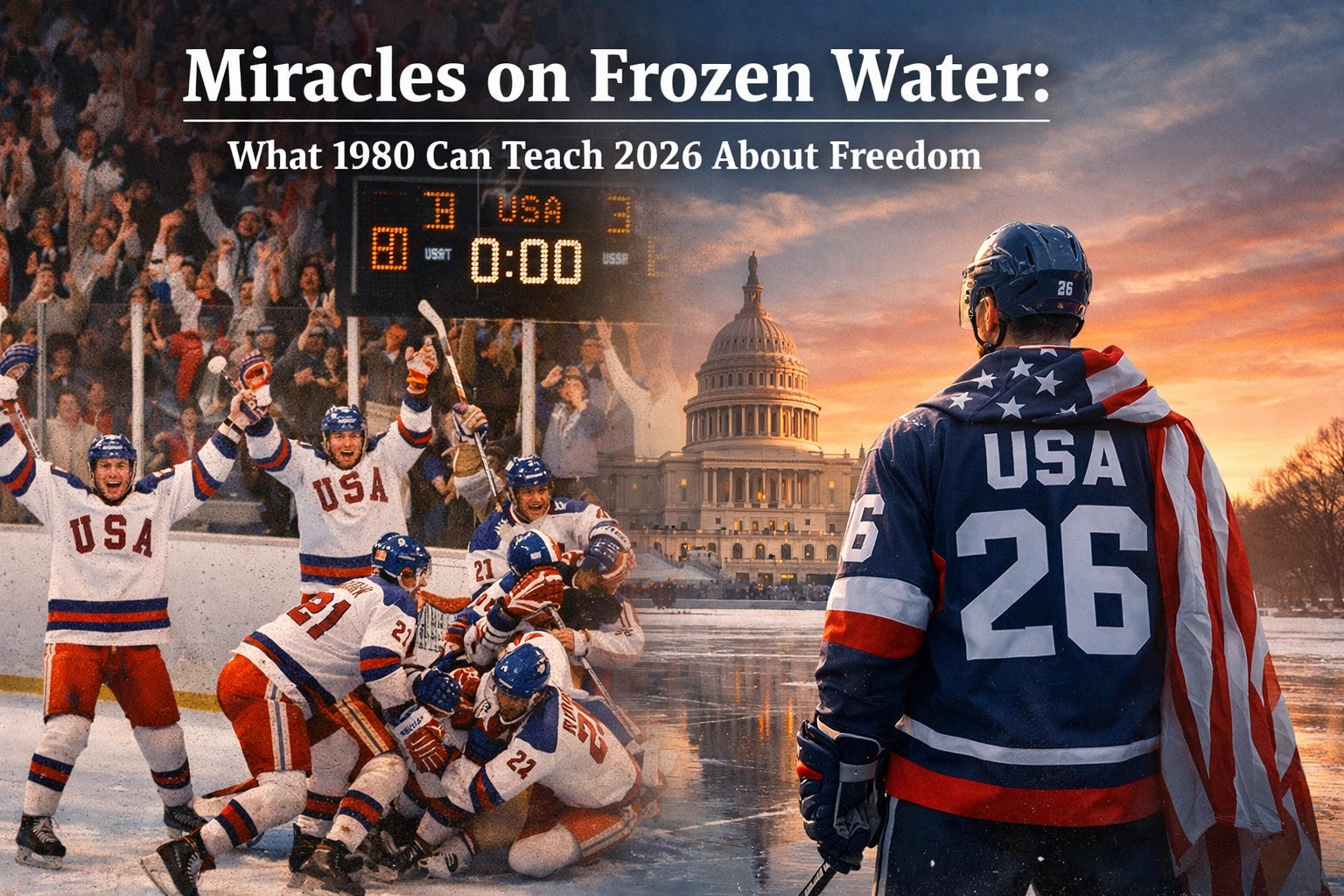
The United States just defeated Canada in the 2026 Winter Olympic Hockey finals, and the celebration across the nation reminded me of something powerful. About a week ago, a friend suggested I watch Miracle on Ice, and I found myself hooked within minutes. I became instantly invested in a story that felt like a chapter from American civil religion. As I watched our athletes celebrate gold this past week, I couldn’t help reflecting on what that 1980 team accomplished and what it still teaches us about freedom, unity, and the soul of a nation.
The Backdrop of a Miracle
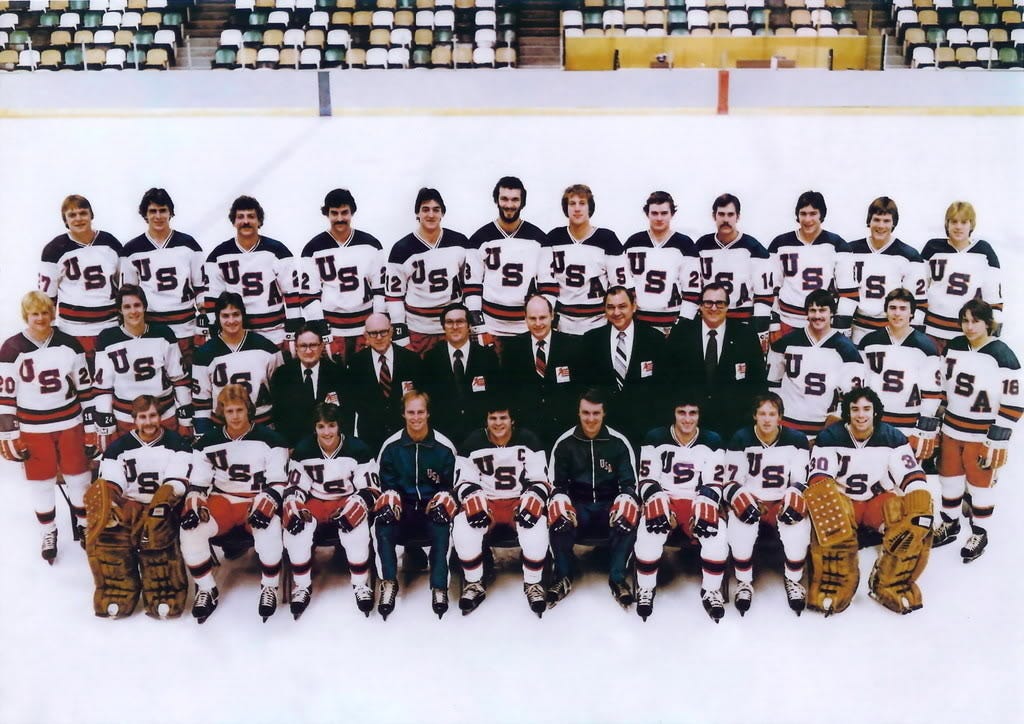
The film recounts the true story of the 1980 United States Olympic hockey team, a roster of college players assembled by coach Herb Brooks to face the seemingly invincible Soviet Union in Lake Placid. For those unfamiliar with the event, the Soviet team had dominated international hockey for years and had just crushed NHL All Stars in exhibition play. The Americans were young, largely unknown, and considered cannon fodder for a geopolitical spectacle disguised as a semifinal game. And yet, on February 22, 1980, the United States defeated the Soviet Union 4 to 3 in what commentator Al Michaels famously called a “miracle.”
To grasp why this moment still matters, one must remember the cultural and political atmosphere of the late 1970s. The Cold War had ground down public morale through years of proxy conflicts, nuclear brinkmanship, and televised anxieties. The Iranian hostage crisis was unfolding in real time. Inflation and energy shortages fed a sense of national fatigue. The United States appeared uncertain of its place in the world, while the Soviet Union projected disciplined strength. Consequently, when the two nations met on ice, the stakes transcended athletic competition. This was a symbolic confrontation between rival visions of the human person and the state.
The Monoculture We’ve Lost
What struck me most in watching the film was the palpable monoculture that united a patriotic society in common mission and cause. The country rallied. Flags flew from porches and storefronts. Living rooms turned into communal theaters of hope. In that era, a victory for the national team felt like a victory for the nation itself. I couldn’t begin to describe how much I loved the collective affection for the United States that seemed to animate the entire country. Citizens cheered with an intensity that bordered on quasi-liturgical participation. The game provided a shared narrative in which millions could locate themselves. In our divided and fragmented age, that image feels almost exotic.
Sports, especially at the national level, serve the purpose of unifying culture around a common cause. Sociologically, sport functions as a ritualized contest that channels aggression, loyalty, and aspiration into structured form. Psychologically, it creates identification between spectator and participant, producing what Émile Durkheim would call collective effervescence, a surge of shared emotion that binds individuals into a moral community. Through uniforms, anthems, and flags, the athletic arena becomes a stage upon which national identity is rehearsed and reaffirmed. Therefore, when victory arrives, it is experienced as communal vindication.
Gladiators for the Republic
Our athletes today function in ways similar to how gladiators and warriors functioned in ancient and medieval societies. They embody strength, courage, and disciplined sacrifice before a watching public. The contest becomes a proxy for larger anxieties and aspirations. In the case of Miracle on Ice, the game carried disproportionate weight because of the Cold War context. The United States and the Soviet Union faced each other under the shadow of nuclear arsenals capable of annihilating the planet. Thousands of lives had been lost in ideological struggles across continents. Thus, when American skaters confronted the Soviets, the symbolism was unmistakable. This was the war itself translated into skates and sticks.
Those young men bore the weight of a nation’s wounded pride and anxious hope. The underdog narrative intensified the drama. The Soviet machine appeared methodical and impenetrable. The American roster looked youthful and inexperienced. Yet, what unfolded was a display of grit and ingenuity that Americans have long celebrated as part of their cultural mythology. The Americans outskated, outmaneuvered, and outlasted the Soviets. The stunned silence on the Soviet bench testified to the shock of defeat. Meanwhile, across the United States, citizens erupted into spontaneous celebration. In that moment, morale shifted. A psychological barrier cracked.
Freedom vs. Coercion: The Anthropological Divide
The film also offers a window into the communist concept of sport. Under the Soviet system, athletes were instruments of state prestige. Individual aspirations were subordinated to ideological demonstration. Training was rigorous and impersonal. The player existed for the cause of the state. Victory validated the system. Defeat threatened it. This framework reveals a fundamental anthropological difference. When the individual is absorbed into the collective, freedom becomes functional rather than personal. The athlete’s life is valuable insofar as it serves state objectives.
In contrast, the American team embodied a voluntary unity. Each player chose to invest himself in the common cause of representing the United States. They forwent individual glory for team cohesion. Their commitment arose from consent rather than coercion. This distinction matters deeply. A freely given sacrifice carries moral weight that forced conformity cannot replicate. Coercion can mobilize bodies, yet it rarely ignites hearts. Willing devotion, by contrast, inspires beyond calculation. It animates communities and reshapes morale.
Furthermore, the American experiment has long rested upon the idea that individuals freely associate for common goods. The team became a microcosm of constitutional order. Diverse personalities from different colleges were forged into a unified squad through shared discipline and chosen loyalty. Herb Brooks demanded relentless conditioning, yet his authority aimed at cultivating mutual trust rather than ideological obedience. In that sense, the locker room mirrored a society that prizes individuality alongside solidarity.
The Power of Shared Narrative
The psychological impact of the victory cannot be overstated. Nations require narratives of competence and hope. During seasons of uncertainty, a single symbolic triumph can recalibrate public sentiment. Miracle on Ice provided such recalibration. It suggested that ingenuity and perseverance could overcome structural disadvantage. It affirmed that disciplined freedom could challenge centralized power. The crowd’s chant of “U S A” echoed beyond the rink as an affirmation of identity.
There is, admittedly, a mild irony in observing how rare such monocultural moments feel today. Contemporary society is fractured along political, cultural, and technological lines. Shared national experiences are increasingly filtered through personalized media ecosystems. In 1980, three television networks shaped common memory. Today, thousands of digital channels curate divergent narratives. Consequently, the possibility of unanimous emotional participation appears diminished. That realization invites reflection on what has been gained and what has been forfeited.
What 2026 Can Learn From 1980
Yet, remembering Miracle on Ice offers more than nostalgia. It invites analysis of the forces that bind societies. Sports reveal how collective mission can transcend partisan divisions. When spectators align their hopes with a team, they temporarily suspend secondary disputes in favor of shared aspiration. That capacity for unity remains present, though it requires intentional cultivation. Ritual, symbol, and narrative continue to shape civic life.
Moreover, the distinction between coerced unity and voluntary solidarity retains contemporary relevance. Societies thrive when individuals willingly contribute to common goods. When allegiance is extracted through pressure, enthusiasm wanes and cynicism spreads. The American players in 1980 skated with freedom. They embraced the burden of representation because they loved their country. That love energized performance in ways that ideology alone cannot manufacture.
Therefore, as this anniversary approaches, the story deserves remembrance. It stands as a case study in the power of shared purpose. It illustrates how sports can serve as cultural glue during seasons of anxiety. It reminds us that grit and ingenuity remain potent forces. And perhaps, in a time hungry for cohesion, it gently suggests that freely chosen unity carries a strength that imposed conformity never attains.
In the end, Miracle on Ice was about hockey, and it was about far more than hockey. It was about a nation discovering renewed confidence through the disciplined courage of young men on frozen water. It was about the difference between a state that commands devotion and a country that inspires it. And for that reason alone, it is worth revisiting, reflecting upon, and allowing to stir once again the memory of what a united people can accomplish when they choose, together, to believe.
As we celebrate our 2026 victory, we would do well to remember what made 1980 so powerful. The game mattered because the players played freely. They represented a nation built on the idea that human beings possess dignity given by their Creator, and that this dignity cannot be surrendered to any earthly power. When we watch our athletes compete, we witness that truth in motion. And when they triumph, we celebrate something deeper than a scoreboard. We celebrate the enduring possibility that freedom, when embraced with courage and discipline, remains the most powerful force on earth.
Dr. Peters post reminds us that the most potent witness to the Gospel comes from a heart that freely chooses to sacrifice for the kingdom rather than one acting out of obligation.
The USA Olympic Hockey Team worked hard and did a marvelous job. Yeah for America!!!! God bless America! Maureen