

Christmas, AI, and the Sacred | Dr. Marcus Peter
A Catholic Response to the McDonald’s Ad Backlash

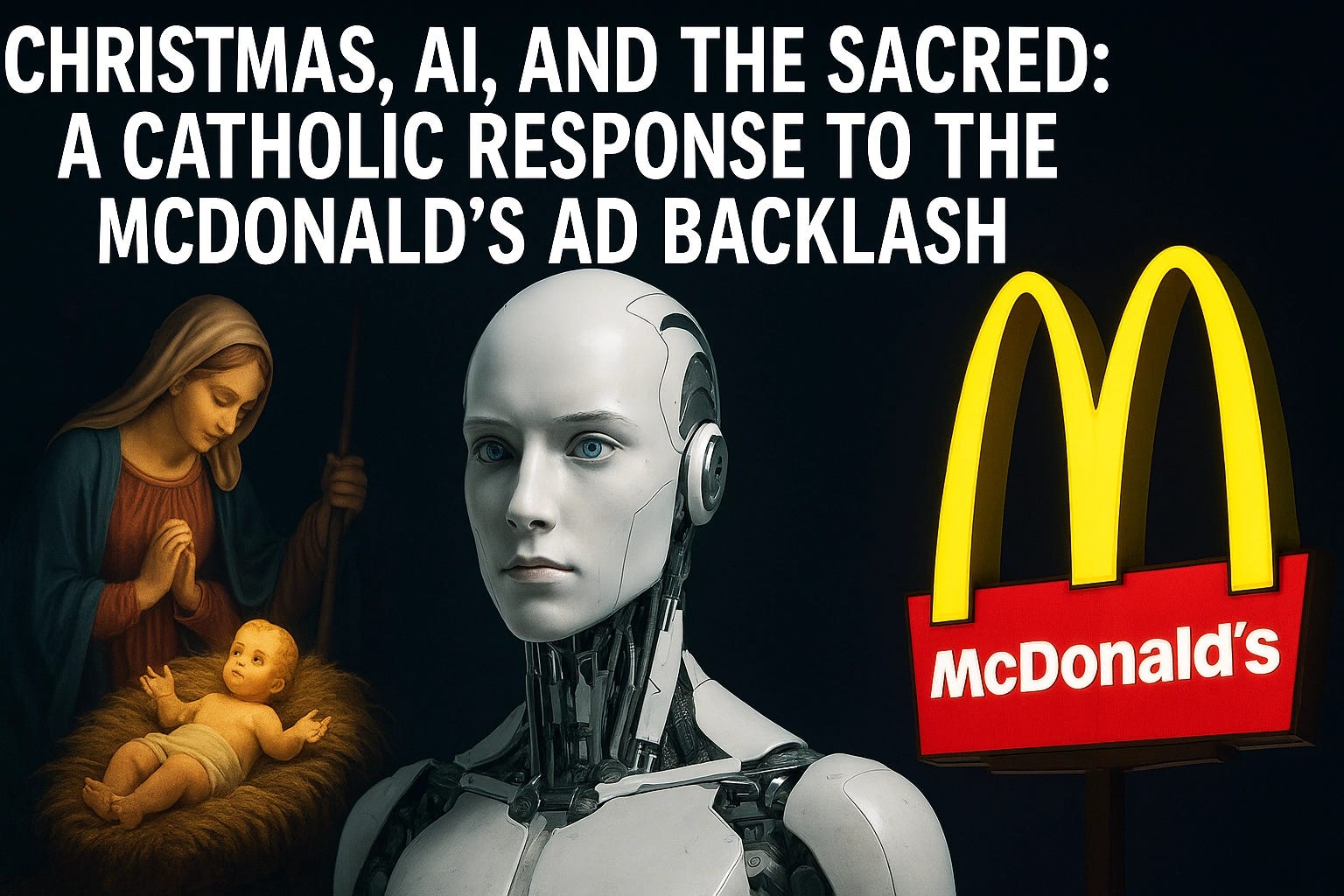
The recent withdrawal of McDonald’s Netherlands’ AI-generated Christmas advertisement reveals far more than corporate miscalculation or public relations failure. This forty-five-second digital creation, cynically titled “the most terrible time of the year,” exposed the fundamental tension between technological capability and moral wisdom that defines our current cultural moment. The advertisement depicted AI-generated humans experiencing a cascade of Christmas disasters: broken ornaments, traffic-stuck sleighs, mishaps with decorations: while a distorted version of “It’s the Most Wonderful Time of the Year” played mockingly in the background.

The backlash came swiftly across social media platforms. Viewers described the content as “unsettling,” “creepy,” and “inauthentic.” Critics condemned the use of artificial intelligence to manufacture what should emerge from human creativity and genuine seasonal sentiment. Within days, McDonald’s removed the advertisement entirely, acknowledging that while they intended to reflect holiday stresses, they failed to honor the season’s deeper meaning for their customers.
This controversy illuminates a profound spiritual crisis embedded within our technological advancement. Artificial intelligence possesses remarkable capacity to mimic human creativity, yet it fundamentally lacks the soul that transforms mere production into authentic artistic expression. The McDonald’s advertisement demonstrated this limitation with startling clarity. AI could generate technically competent images of Christmas scenes, manipulate familiar musical themes, and construct narrative sequences that followed logical patterns. However, the resulting creation carried no trace of the wonder, joy, or transcendent meaning that Christmas embodies.
From a Catholic perspective, Christmas represents the ultimate convergence of divine and human, eternal and temporal, sacred and material. The Incarnation transformed human history precisely because God entered creation through human flesh, honoring both our material existence and our spiritual destiny. This mystery cannot be replicated through algorithms or digital manipulation. When artificial intelligence attempts to capture Christmas themes, it produces hollow imitations that reveal the technology’s fundamental limitation: it processes information without comprehending meaning.
The advertisement’s cynical portrayal of Christmas as a season of stress and disaster represents more than creative misjudgment. It reflects a broader cultural tendency to reduce sacred seasons to commercial opportunities while draining them of transcendent significance. McDonald’s chose to position their restaurants as refuges from Christmas “madness,” implying that the celebration itself creates problems requiring corporate solutions. This approach reveals how secular thinking struggles to comprehend the sacred dimensions of human experience.

Catholic social teaching offers essential wisdom for navigating artificial intelligence’s growing influence on cultural expression. The principle of subsidiarity suggests that human activities should remain under human direction whenever possible, with technology serving rather than replacing human judgment. The creation of advertising content: particularly content addressing sacred themes: requires human wisdom, moral sensitivity, and spiritual discernment that algorithms cannot provide.
The dignity of human work, emphasized throughout papal encyclicals, faces direct challenge when artificial intelligence replaces human creativity in cultural production. While AI can serve as a tool for human artists, allowing it to generate complete cultural expressions independently undermines the fundamental relationship between human creativity and divine inspiration. Artists participate in God’s creative activity through their work, bringing beauty and meaning into existence through their unique human perspective. Artificial intelligence cannot participate in this sacred dimension of creativity.
Natural law principles provide additional guidance for discerning AI’s appropriate role in cultural expression. Human reason recognizes that certain activities require specifically human faculties: emotional intelligence, moral reasoning, spiritual sensitivity: that cannot be replicated through computational processes. The creation of content addressing sacred themes demands these uniquely human capacities. When artificial intelligence attempts to generate such content, it produces technically competent material lacking the spiritual depth that human audiences instinctively recognize as absent.
The McDonald’s controversy also reveals the profound cultural confusion surrounding Christmas’s meaning in secular societies. Even among those who criticized the advertisement’s AI generation, few articulated deeper concerns about its cynical portrayal of the Christmas season itself. The advertisement treated Christmas as merely another commercial opportunity, reducing the Incarnation’s cosmic significance to consumer preferences and marketing strategies.

This reduction reflects what Pope Benedict XVI identified as the “dictatorship of relativism”: the cultural tendency to treat all meanings as equally valid while refusing to acknowledge transcendent truth. Christmas carries objective significance that transcends cultural preferences or commercial calculations. The season celebrates God’s entrance into human history, transforming creation’s fundamental relationship with the divine. This reality remains true regardless of whether secular culture acknowledges it.
Christians bear particular responsibility for maintaining Christmas’s sacred character against both technological manipulation and cultural trivialization. This responsibility extends beyond defending religious symbols or traditional practices. It requires actively cultivating and communicating the theological depths that give Christmas its transformative power. When artificial intelligence attempts to generate Christmas content, Christians should recognize the fundamental inadequacy of such efforts while articulating why human creativity guided by faith produces authentically meaningful expressions.
The path forward requires careful discernment regarding artificial intelligence’s appropriate role in cultural production. AI can serve as a valuable tool for research, design assistance, and technical execution when guided by human wisdom and moral principles. However, the generation of complete cultural expressions: particularly those addressing sacred themes: should remain under human direction informed by faith and natural reason.
Christian cultural leaders must model this discernment by creating content that demonstrates the difference between authentic spiritual expression and algorithmic imitation. The contrast becomes apparent when audiences encounter work emerging from genuine human reflection on sacred mysteries compared with AI-generated material lacking spiritual depth. This distinction educates public taste while preserving space for transcendent meaning within cultural discourse.
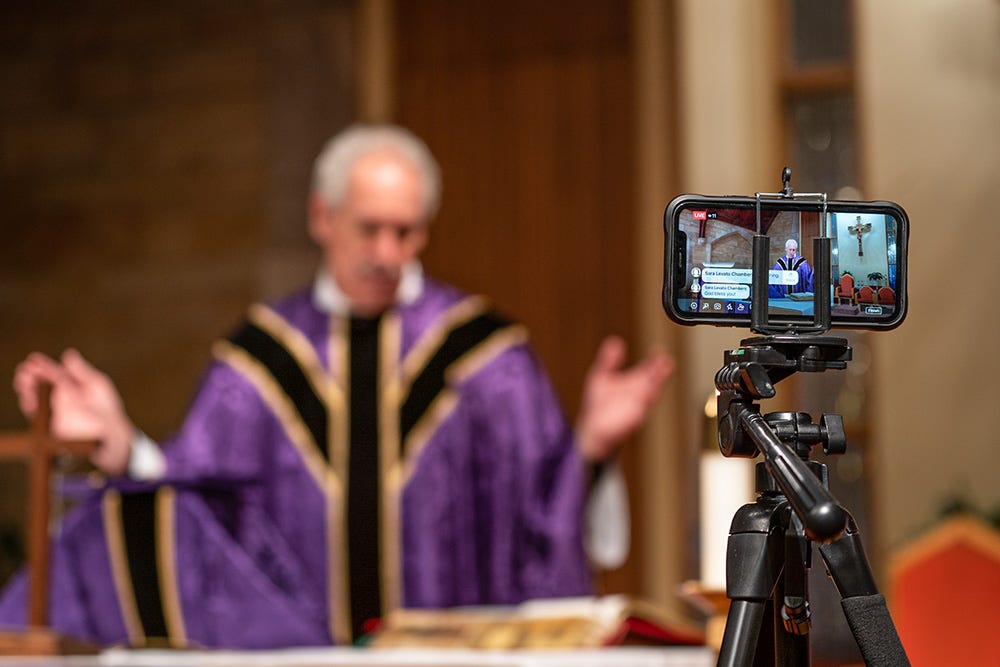
The McDonald’s advertisement’s failure offers valuable lessons for how Christians should engage artificial intelligence’s expanding influence. Rather than simply condemning technological advancement, believers should articulate positive visions for how AI can serve human flourishing while respecting the boundaries that protect human dignity and sacred meaning. This requires both technical understanding and theological wisdom.
Educational institutions, particularly Catholic universities and seminaries, bear special responsibility for developing frameworks that integrate technological capability with moral reasoning. Future cultural leaders need formation that enables them to utilize artificial intelligence’s benefits while maintaining the spiritual sensitivity required for authentic cultural expression. This formation must address both practical questions about AI’s appropriate use and deeper philosophical questions about human creativity’s relationship to divine inspiration.
The controversy surrounding McDonald’s Christmas advertisement ultimately points toward fundamental questions about human identity and cultural meaning in the digital age. Christians possess unique resources for addressing these questions through the Catholic intellectual tradition’s integration of faith and reason, natural law principles, and theological anthropology that affirms human dignity while recognizing our dependence on divine grace.
Artificial intelligence will continue expanding its influence on cultural production, making these discernment questions increasingly urgent. Christians who engage these challenges with theological depth and practical wisdom can help preserve space for authentic spiritual expression while guiding technology’s development in directions that serve rather than replace human creativity guided by faith. The sacred character of Christmas; and indeed all transcendent meaning: depends on this careful cultivation of human wisdom in relationship with divine truth.